 Dog Grooming Products
Aquarium Filtration: The Complete Beginner-to-Pro Guide for Clean and Healthy Fish Tanks

Buy Aquarium Filtration at Ocean Paws
If you’ve ever looked at a crystal-clear aquarium and wondered how it stays that way, the answer is simple: proper Aquarium Filtration.
Many beginners think a filter is just a box that moves water around. In reality, Aquarium Filtration is the heart of your tank. It keeps the water safe, removes waste, supports beneficial bacteria, and creates a stable environment where fish and plants can thrive.
In this guide, I’ll explain everything in simple language — no complicated science terms, no confusing jargon. Whether you’re setting up your first fish tank or upgrading your existing system, this article will help you understand how Aquarium Filtration works and how to choose the right setup.
Why Aquarium Filtration Is So Important
An aquarium is a closed system. Unlike rivers or oceans, fresh water does not constantly flow in and out. That means fish waste, uneaten food, plant debris, and other organic matter stay inside the tank unless you remove them.
Without proper Aquarium Filtration, you may face:
- Cloudy water
- Bad smell
- Ammonia spikes
- Fish stress
- Algae outbreaks
- Sudden fish deaths
Good filtration prevents all of this. It keeps water clean, oxygen-rich, and biologically stable.
The Three Types of Aquarium Filtration
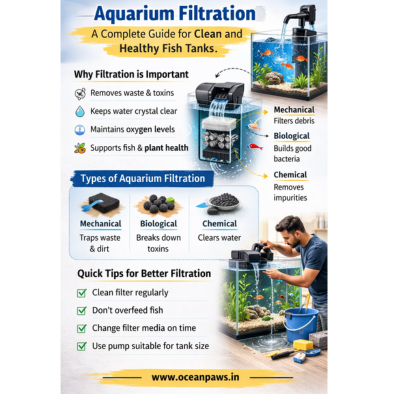
To truly understand Aquarium Filtration, you need to know that it works in three different ways: mechanical, biological, and chemical.
1. Mechanical Filtration – Removing Visible Waste
This is the simplest form of filtration. Mechanical filtration removes physical debris like:
- Fish waste
- Uneaten food
- Plant leaves
- Floating particles
Filter sponges or filter pads trap these particles as water passes through.
Think of it like a sieve that catches dirt.
However, mechanical filtration alone is not enough. It only removes visible waste, not harmful toxins.
2. Biological Filtration – The Most Important Part
This is where the real magic happens.
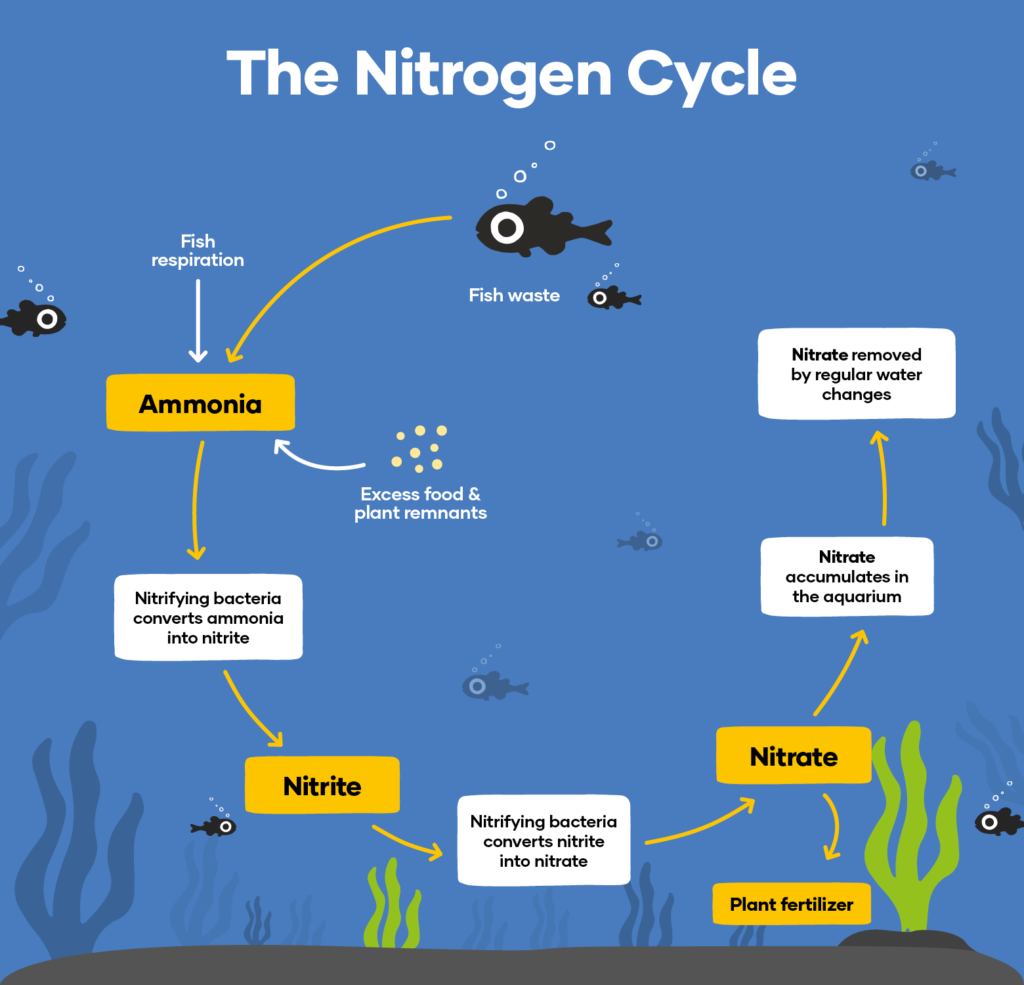
Fish release ammonia through waste and breathing. Ammonia is highly toxic. Even small amounts can harm or kill fish.
Biological Aquarium Filtration uses beneficial bacteria to convert:
Ammonia → Nitrite → Nitrate
Ammonia and nitrite are toxic. Nitrate is much safer and can be controlled through water changes or plants.
These good bacteria live inside filter media such as ceramic rings, bio balls, or sponge filters.
Without biological filtration, your tank cannot survive long-term.
3. Chemical Filtration – Extra Water Polishing
Chemical filtration removes dissolved impurities using materials like:
- Activated carbon
- Zeolite
- Phosphate removers
This type of Aquarium Filtration helps:
- Remove odors
- Clear discoloration
- Eliminate medication residue
- Reduce toxins
It’s useful but not always mandatory for every tank.
Common Types of Aquarium Filters
Now that you understand how Aquarium Filtration works, let’s look at the most common filter types.
Sponge Filters
Best for:
- Small tanks
- Breeding tanks
- Shrimp tanks
They are simple, affordable, and excellent for biological filtration. They are also very safe for baby fish.
Hang-On-Back (HOB) Filters
Best for:
- Beginner aquariums
- Small to medium tanks
They are easy to install and maintain. HOB filters provide mechanical and biological filtration, and some allow chemical media as well.
Internal Filters
Best for:
- Small tanks
- Budget setups
They sit inside the aquarium and are easy to use. However, they may not be powerful enough for heavily stocked tanks.
Canister Filters
Best for:
- Large aquariums
- Planted tanks
- Marine tanks
Canister filters are powerful and customizable. They offer strong Aquarium Filtration with multiple media chambers. They are more expensive but provide excellent long-term stability.
Sump Filtration (Mostly for Marine Tanks)
Sump systems are advanced setups used mainly in marine aquariums. They offer high-capacity Aquarium Filtration and allow equipment like protein skimmers and reactors to be added.
How to Choose the Right Aquarium Filtration System
Choosing the correct system depends on several factors.
Tank Size
Larger tanks need stronger filtration. Always check the filter’s capacity rating.
As a general rule:
Choose a filter that can process at least 4–5 times your tank volume per hour.
Fish Load (Bioload)
More fish = more waste.
If your tank is heavily stocked, upgrade your filtration. Underpowered filters are one of the biggest beginner mistakes.
Freshwater vs Marine
Marine aquariums require stronger filtration because saltwater fish and corals are more sensitive to water quality changes.
Maintenance Level
Some filters require frequent cleaning. Others are more low-maintenance. Choose one that matches your routine and experience.
How Often Should You Clean Your Filter?
This is where many people go wrong.
Never wash your filter media with tap water. Tap water contains chlorine, which kills beneficial bacteria.
Instead:
- Rinse sponges in old tank water
- Clean mechanical media every 2–4 weeks
- Replace chemical media as recommended
- Never replace all biological media at once
Proper maintenance keeps Aquarium Filtration effective without disrupting the nitrogen cycle.
Signs Your Aquarium Filtration Is Not Working Properly
Watch out for these warning signs:
- Fish gasping at the surface
- Cloudy water
- Strong smell
- Sudden algae bloom
- High ammonia readings
If you notice these issues, check:
- Filter flow rate
- Clogged media
- Power supply
- Media condition
Sometimes, simply cleaning the sponge restores full performance.
Can You Have Too Much Filtration?
This is a common question.
Generally, more filtration is better than less. However, extremely strong flow may stress certain fish species like bettas or angelfish.
If flow is too strong:
- Use spray bars
- Add flow control valves
- Position output carefully
Balance is key.
Aquarium Filtration for Planted Tanks
In planted aquariums, filtration must be balanced carefully.
Too much flow may:
- Disturb substrate
- Remove injected CO₂
Too little flow may:
- Cause dead spots
- Lead to algae growth
The goal is gentle but consistent circulation.
Final Thoughts
Aquarium Filtration is not just equipment. It is the life support system of your aquarium.
When filtration is strong and stable:
- Fish stay healthy
- Water remains clear
- Algae is easier to control
- Maintenance becomes simple
Whether you run a small freshwater tank or a large marine setup, investing in proper Aquarium Filtration will save you time, money, and frustration in the long run.
If there’s one lesson every aquarist learns, it’s this: never compromise on filtration.
Frequently Asked Questions (FAQ)
1. What is Aquarium Filtration?
Aquarium Filtration is the process of removing waste, toxins, and impurities from aquarium water using mechanical, biological, and chemical methods.
2. Is Aquarium Filtration necessary for small tanks?
Yes. Even small tanks produce ammonia. Proper filtration is essential regardless of tank size.
3. How long should my filter run daily?
Your filter should run 24 hours a day. Turning it off can kill beneficial bacteria.
4. Can I turn off my filter at night?
No. Aquarium Filtration must operate continuously to maintain oxygen levels and bacterial colonies.
5. How do I know if my filter is too small?
If ammonia or nitrite levels rise frequently or water turns cloudy, your filter may be underpowered.
6. Do I need chemical filtration all the time?
Not always. Many tanks function perfectly with mechanical and biological filtration alone.
7. How often should I replace filter media?
Mechanical and chemical media may need replacement periodically. Biological media should rarely be replaced and never all at once.