 Dog Grooming Products
Filter by category
Showing all 2 results
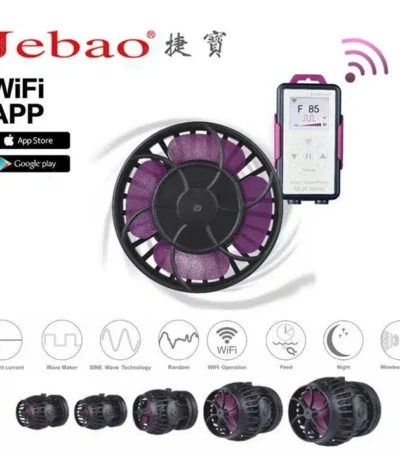
Jebao MLW Wavemaker
₹9,300.00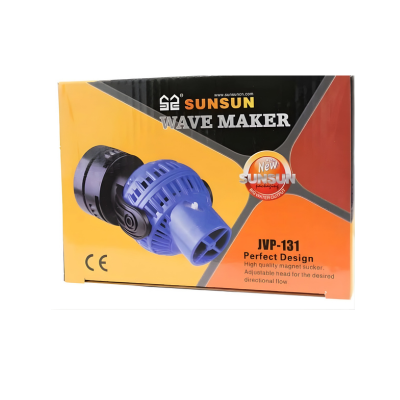
Sunsun Wavemaker JVP 131
Wavemakers for Marine and Freshwater Aquariums India
Written by Pavan | Marine Aquarium Hobbyist and Co-founder, Ocean Paws Hyderabad | Last updated: September 2026
A wavemaker is one of the most important pieces of equipment in a reef tank and one of the most underrated in a freshwater aquarium. It creates the random, multidirectional water movement that corals depend on to feed, breathe and shed waste from their tissue. In a freshwater tank it eliminates dead zones, improves oxygenation and keeps fish healthier with less effort from you.
At Ocean Paws we stock wavemakers suited to tanks from small nano reefs to large display systems. Every model is chosen for reliable performance in Indian room temperatures, where higher ambient heat means water circulation matters even more than it does in cooler climates.
Why Water Movement Matters More Than Most Hobbyists Realise
Still water in a reef tank is genuinely dangerous. When water stops moving, oxygen levels drop rapidly in warm Indian room temperatures. Detritus and uneaten food settle in corners and behind rockwork and decompose, releasing ammonia and nitrate directly into areas your filter cannot reach. Nuisance algae including cyanobacteria establishes fastest in low-flow zones where water sits undisturbed.
Corals have no way to move toward food or away from waste. They depend entirely on water movement to deliver food particles to their feeding polyps and to carry metabolic waste away from their tissue surfaces. Without adequate flow, corals close their polyps, stop feeding, lose colour and eventually die back from tissue necrosis. This is why an experienced reef keeper will tell you that flow is as important as light for coral health.
In a freshwater community tank, good circulation keeps the temperature even throughout the water column, ensures oxygen exchange at the surface reaches every layer of the tank, prevents the surface film that forms in low-flow tanks and reduces the spots where harmful bacteria thrive.
How Much Flow Does Your Tank Need
Flow rate is measured in litres per hour (LPH). The total turnover rate is the number of times all the water in your tank passes through your circulation equipment every hour. This is the single most important number when choosing a wavemaker.
For reef tanks the accepted minimum is 20 times tank volume per hour from all circulation combined, including your sump return pump. Most serious reef keepers target 25 to 40 times. For freshwater community tanks, 5 to 10 times tank volume per hour is usually sufficient.
Your sump return pump provides a portion of this turnover, so the wavemaker only needs to make up the remainder. As a rough guide, a sump return pump typically delivers 5 to 8 times tank volume per hour, leaving the wavemaker to cover the rest.
Wavemaker Selection Guide by Tank Size and Coral Type
Use this table to find the right wavemaker flow rate for your specific setup. The figures shown are the total wavemaker flow required after accounting for your return pump contribution.
| Tank Volume | Tank Type | Coral Type | Total Flow Needed (LPH) | Wavemaker Flow Needed (LPH) | Number of Wavemakers |
|---|---|---|---|---|---|
| 60 litres | Nano Reef | Soft Corals and LPS | 1,200 to 2,400 | 600 to 1,500 | 1 |
| 100 litres | Small Reef | Soft Corals and LPS | 2,000 to 3,000 | 1,000 to 2,000 | 1 |
| 100 litres | Small Reef | SPS Corals | 3,000 to 4,000 | 2,000 to 3,000 | 1 to 2 |
| 150 litres | Medium Reef | Soft Corals and LPS | 3,000 to 4,500 | 1,500 to 3,000 | 1 to 2 |
| 150 litres | Medium Reef | SPS Corals | 4,500 to 6,000 | 3,000 to 4,500 | 2 |
| 200 litres | Medium Reef | Soft Corals and LPS | 4,000 to 6,000 | 2,500 to 4,000 | 2 |
| 200 litres | Medium Reef | SPS Corals | 6,000 to 8,000 | 4,000 to 6,000 | 2 |
| 300 litres | Large Reef | Soft Corals and LPS | 6,000 to 9,000 | 4,000 to 6,000 | 2 |
| 300 litres | Large Reef | SPS Corals | 9,000 to 12,000 | 6,000 to 9,000 | 2 to 3 |
| 500 litres | Large Reef | Mixed Reef | 10,000 to 15,000 | 7,000 to 12,000 | 2 to 4 |
| 60 to 100 litres | Freshwater Community | No corals | 300 to 1,000 | 300 to 800 | 1 |
| 150 to 250 litres | Freshwater Community | No corals | 750 to 2,500 | 500 to 1,500 | 1 |
How to read this table: The Total Flow Needed column is the combined output from your sump return pump and wavemaker together. The Wavemaker Flow Needed column is what your wavemaker alone should deliver, assuming your return pump contributes around 5 to 8 times tank volume per hour. If you do not have a sump, size your wavemaker to the Total Flow Needed figure instead.
Indian summer note: During peak summer months from March to June in cities like Hyderabad, Chennai and Mumbai, higher water temperatures reduce dissolved oxygen levels. Add 20 to 25 percent to your wavemaker flow target during summer. Better water movement partially compensates for lower oxygen saturation in warm water.
Wavemaker Flow Modes Explained
Modern wavemakers offer several programmable modes that create different types of water movement. Understanding these helps you choose the right setting for your specific livestock.
Constant mode runs the pump at a fixed speed continuously. It is the simplest setting and suits freshwater tanks and fish-only marine tanks where predictable, steady flow is more important than mimicking natural reef conditions.
Pulse mode alternates between high and low output at set intervals. The surging movement this creates is ideal for soft corals and LPS corals that naturally live in areas of moderate, rhythmic flow. Many experienced reef keepers in India use pulse mode as their standard setting for mixed reef tanks.
Wave mode ramps the pump output up and down in a smooth sinusoidal pattern, simulating the rise and fall of natural wave action. It creates a gentle, continuous variation in flow that suits most coral types and looks visually appealing in a well-aquascaped reef tank.
Random mode varies pump speed unpredictably, producing turbulent, non-repeating flow patterns. This is the most natural mode and the one that SPS corals thrive under. Random flow prevents corals from adapting to a predictable current and keeps all areas of the tank active.
Wavemaker Placement Guide
Where you place a wavemaker has a bigger impact on tank health than most hobbyists expect. Poor placement creates dead zones behind rockwork even with a powerful pump running.
For reef tanks, place your wavemaker high on one side wall, aimed across the tank at a slight downward angle. This pushes water across the surface and along the back wall of the tank, creating circulation that reaches behind your rockwork from above. If you have two wavemakers, place them on opposite walls and run them in alternating mode so the flow direction reverses regularly.
Avoid pointing a wavemaker directly at corals at close range, especially at high power settings. Strong direct flow from close distance causes tissue damage and prevents polyp extension. Position the pump so it creates broad water movement across the tank rather than a concentrated jet aimed at a single spot.
For freshwater tanks, a single wavemaker positioned near the surface at one end of the tank and aimed down the length of the aquarium creates a natural river-current effect that most community fish find stimulating and enjoyable.
Wavemakers vs Powerheads
Powerheads and wavemakers are often confused. A powerhead is a basic submersible pump that creates unidirectional flow at a fixed rate. It moves water reliably but produces the same flow pattern continuously, which creates dead zones on the opposite side of the tank and does not replicate natural reef conditions.
A wavemaker is a powerhead with programmable flow modes. It produces variable, randomised flow that more closely matches the conditions corals evolved in. In a reef tank, always choose a wavemaker over a basic powerhead. The programmable modes make a genuine difference to coral health and growth.
Indian Conditions and Wavemaker Performance
Indian summer room temperatures regularly exceed 30°C in cities like Hyderabad, Chennai and Mumbai between March and June. At these temperatures, oxygen levels in aquarium water drop significantly. Good water movement from a well-placed wavemaker is one of the most effective things you can do to keep oxygen levels high during hot weather, alongside surface agitation and if necessary a fan directed across the water surface.
During summer power cuts, circulation stops and oxygen depletes rapidly in warm water. A UPS for your wavemaker and return pump is a worthwhile investment for any reef keeper in India. Even a 20-minute power cut in a heavily stocked reef tank at 30°C with no flow can cause stress you will see in closed coral polyps and lethargic fish the following day.
Shop Wavemakers at Ocean Paws
We stock wavemakers for reef and freshwater tanks with fast delivery across India. For help choosing the right flow rate and placement for your specific setup, contact us at info@oceanpaws.in or call +91 7416684040. Also see our protein skimmers, marine filter media and full marine aquarium range.
Frequently Asked Questions About Wavemakers
How many wavemakers does a reef tank need?
Most reef tanks benefit from two wavemakers placed on opposite side walls, running in alternating or random mode. This eliminates dead zones and creates the turbulent, multidirectional flow that corals need. A single powerful wavemaker can work in a smaller tank under 150 litres, but two units give more even coverage in larger systems.
Where should I place a wavemaker in a reef tank?
Place your wavemaker high on the side wall, aimed slightly downward across the tank. This drives water across the surface and behind your rockwork without creating a direct concentrated jet aimed at corals. For a two-wavemaker setup, place the second unit on the opposite wall and run both in alternating mode so the flow reverses regularly throughout the day.
What flow rate wavemaker do I need for my tank?
For a reef tank, aim for total water movement of 20 to 40 times your tank volume per hour from all circulation equipment combined. A 150 litre reef needs 3,000 to 6,000 LPH total. Your return pump provides some of this, so size your wavemaker to cover the remainder. Use the selection guide table above for specific figures by tank size and coral type.
Can I use a wavemaker in a freshwater aquarium?
Yes. Wavemakers work well in freshwater tanks and improve oxygen exchange, reduce dead zones and keep fish more active. Use a gentle constant or pulse mode setting rather than the high-turbulence random mode suited to reef tanks. Position the pump near the surface and aim it along the length of the tank to create a natural river-current effect.
Should I turn off my wavemaker at night?
In a reef tank, keep your wavemaker running at night but reduce the flow rate if your model allows it. Corals feed actively at night and need water movement to deliver food particles to their polyps. Completely stopping flow at night causes oxygen depletion, allows detritus to settle and can stress fish and corals. Many wavemaker models have a night mode that runs at 30 to 50 percent of daytime flow, which is ideal.
Why is my wavemaker making noise?
Noise from a wavemaker is usually caused by the impeller vibrating against the pump body due to calcium deposits. Remove the pump, disassemble the impeller and soak it in undiluted white vinegar for 15 minutes to dissolve calcium buildup. Rinse thoroughly and reassemble. If the noise persists after cleaning, the impeller bearing may be worn and the impeller needs replacement.
Written by Pavan, co-founder of Ocean Paws and marine aquarium specialist with 20 years of hands-on reef keeping experience in Hyderabad, India.


