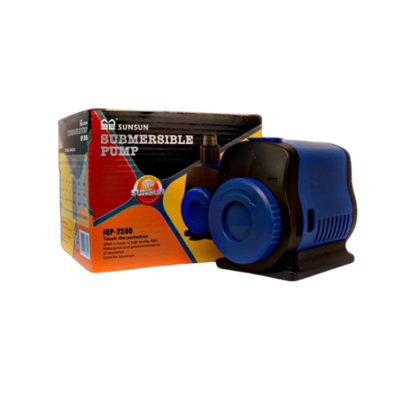
Submerisble Aquarium Pump

Showing the single result

Sunsun Submersible Pump JQP Series

Price range: ₹1,150.00 through ₹2,499.00
Select options This product has multiple variants. The options may be chosen on the product page

A submersible aquarium pump is the heart of every healthy fish tank. Without reliable water movement, your aquarium becomes stagnant, oxygen levels fall, and harmful waste builds up quickly throughout the tank. Moreover, every aquarium in India, whether it is a compact freshwater setup, a lush planted tank, or a thriving marine reef system, depends completely on a quality submersible aquarium pump to stay clean, stable, and full of life.

At Ocean Paws, we stock submersible aquarium pumps for tanks of every size and every type of system. Whether you need a compact internal pump for a small freshwater tank or a powerful sump return pump for a large reef display, you will find the right solution here.

Why Every Aquarium Needs a Submersible Aquarium Pump

Water movement is not optional in a healthy aquarium. It is a biological necessity for every fish, coral, and invertebrate in your tank.

In nature, fish and corals live in rivers, lakes, and oceans where water is constantly in motion. This movement delivers oxygen to the entire water column, prevents harmful gases from building up at the surface, and distributes heat evenly throughout the tank. Furthermore, water movement pushes uneaten food and waste particles into your filter where they can be removed before they break down into ammonia and nitrate.

A submersible aquarium pump replicates this natural water movement inside your closed tank system. Therefore, it is not just about flow. It is about creating the conditions that allow every living thing in your tank to breathe, feed, and thrive every single day.

Additionally, in a marine reef tank, corals depend on water flow to bring food particles to their polyps and carry away their waste products. Without sufficient flow from a reliable submersible aquarium pump, even the hardiest corals will retract, lose colour, and eventually die. So choosing the right pump for your system is one of the most important equipment decisions you will ever make as a hobbyist.

Types of Submersible Aquarium Pump

There are several distinct types of submersible aquarium pump available for hobbyists in India, and each one serves a specific purpose in your tank setup.

Internal Filter Pumps

An internal filter pump sits fully submerged inside your aquarium. It draws water through a sponge or filter cartridge, removes waste particles, and returns clean water directly to the tank in one compact unit. Therefore, internal filter pumps are ideal for small to medium tanks, hospital tanks, fry tanks, and betta setups where a simple all in one solution is the priority. Moreover, they are easy to install, easy to maintain, and completely quiet during operation.

Sump Return Pumps

A sump return pump sits in the sump section of a marine or reef aquarium system. It draws filtered water from the sump and pushes it back up to the main display tank through a return line. The flow rate of your return pump determines how quickly the entire water volume in your system turns over and gets filtered. Furthermore, sump return pumps must be powerful enough to overcome the vertical distance from the sump to the display tank. Therefore, choosing the correct flow rate and head pressure rating for your return pump is essential for proper reef filtration to work correctly.

Circulation Pumps and Powerheads

A circulation pump, also called a powerhead, creates directional water flow inside the main display tank. Unlike a return pump that drives the sump filtration cycle, a circulation pump purely moves water from one area of the tank to another. This creates the random, turbulent flow that reef corals, sea anemones, and active marine fish need to thrive. Additionally, circulation pumps placed at opposite ends of a reef tank prevent dead zones where detritus accumulates and harmful bacteria multiply unchecked.

DC Variable Speed Submersible Pumps

DC powered submersible aquarium pumps use direct current motors with electronic controllers that allow you to adjust the flow rate precisely. You can set a gentle flow for a fry tank, ramp up to maximum flow for a reef system, or programme tidal simulation patterns that change the flow rate automatically throughout the day. Moreover, DC pumps consume significantly less electricity than equivalent AC pumps at the same flow rate. Therefore, for large tanks where a powerful pump runs 24 hours a day, choosing a DC submersible aquarium pump can reduce your electricity bill substantially over a full year of continuous operation.

AC Fixed Speed Submersible Pumps

AC powered submersible aquarium pumps use alternating current motors that run at a fixed speed. They are simple, robust, and extremely reliable over long periods of continuous use. Furthermore, AC pumps are typically more affordable than DC pumps at the same flow rate. For a straightforward freshwater tank or a small marine system where you do not need variable speed control, a quality AC submersible aquarium pump delivers excellent value and years of dependable service without complexity.

Key Technical Specifications You Need to Understand

Before you choose a submersible aquarium pump, you need to understand the specifications listed on every product description.

Flow rate is measured in litres per hour and tells you how much water the pump moves per hour at zero resistance. This is the most important number for sizing a pump to your tank. Generally, a freshwater aquarium needs a pump that turns over the full tank volume at least five to eight times per hour. A reef tank with SPS corals benefits from ten to fifteen times turnover per hour.

Max head is measured in metres and tells you the maximum vertical height the pump can push water against gravity. It is critical for sump return pumps. If your sump sits 60cm below your display tank and the return line adds another 40cm of pipe resistance, your pump needs a max head rating well above 1 metre to deliver adequate flow at that working height. Therefore, always check the head pressure curve of the pump, not just the maximum flow rate listed on the box.

Power consumption is measured in watts. A pump running 24 hours a day adds to your electricity bill continuously throughout the year. Therefore, always compare the power consumption of different pumps at the actual flow rate you need. A DC pump consuming 30 watts and delivering 3000 litres per hour is far more economical than an AC pump consuming 65 watts delivering the same flow.

Noise level matters in a home aquarium environment. Submersible pumps run quieter than external pumps because the water dampens the sound naturally. However, a worn impeller, calcium deposits, or air in the intake can make any pump noisy over time. Therefore, choosing a pump with a ceramic shaft impeller rather than a metal shaft impeller reduces noise significantly and extends the overall service life of the pump.

How to Choose the Right Submersible Aquarium Pump for Your Tank

Choosing a submersible aquarium pump starts with one simple step. Calculate your tank volume in litres and then match a pump to your target turnover rate.

For a freshwater community tank, choose a pump that delivers five to eight times your tank volume per hour. So a 100 litre tank needs a pump delivering at least 500 to 800 litres per hour. This keeps the water clean and oxygenated without creating currents that stress slow-moving fish.

For a planted aquarium, a gentler flow of four to six times the tank volume per hour is usually ideal. Strong currents disturb plant leaves, disrupt CO2 distribution from diffusers, and can uproot delicate stem plants. Therefore, a lower flow rate pump or a DC pump set to a gentle speed works best for planted tanks.

For a marine fish-only tank, aim for eight to ten times the tank volume per hour. Marine fish come from active ocean environments and need more water movement than most freshwater species. Moreover, higher flow rates reduce the risk of dead zones where detritus accumulates and causes nitrate spikes over time.

For a reef tank with soft corals and LPS corals, target ten to fifteen times the tank volume per hour with turbulent, random flow rather than a single strong directional current. Similarly, for an SPS dominated reef, fifteen to twenty times turnover with varied flow patterns gives the best results for coral health, growth, and colouration over the long term.

How to Install and Maintain Your Submersible Aquarium Pump

Installing a submersible aquarium pump correctly from the very start prevents most common problems before they happen.

Place your pump at the lowest point of the sump or at the bottom of the tank for the best priming. Most submersible pumps are self priming when fully submerged, but always ensure the water level covers the intake and the motor housing completely before switching the pump on. Running a pump even briefly without water causes immediate and permanent impeller damage.

Position the return outlet or flow head to push water across the surface of the tank, not directly downward. Surface agitation at the waterline maximises oxygen exchange and releases dissolved carbon dioxide efficiently. Furthermore, in a reef tank, angling the flow heads so they face each other creates the turbulent, random flow that corals experience on a natural reef environment.

Clean your submersible aquarium pump every four to six weeks. Calcium deposits, algae, and biological film build up on the impeller and reduce flow rate significantly over time. Disassemble the pump head, soak it in diluted white vinegar for 30 minutes to dissolve mineral deposits, rinse thoroughly with fresh water, and reassemble. This simple maintenance routine extends pump life by years and keeps flow rates consistent month after month.

Submersible Aquarium Pump for Marine and Reef Aquariums

A marine reef aquarium makes the most demanding requirements of any submersible aquarium pump. Saltwater is corrosive, calcium and magnesium deposit onto pump components over time, and the biological load in a reef system means the pump cannot afford to fail even for a few hours without putting your corals and fish at risk.

Therefore, always choose a submersible aquarium pump that is rated for saltwater use. The materials inside a marine-grade pump, including the impeller, shaft, housing, and seals, resist corrosion and calcium scaling over years of continuous saltwater immersion.

A marine reef tank typically runs at least two submersible pumps working together. A sump return pump handles the filtration cycle. One or two circulation pumps inside the display tank create the random flow that keeps corals healthy. Working alongside your submersible aquarium pump, a protein skimmer removes dissolved organic waste before it breaks down and raises nitrate levels. Together, these two pieces of equipment form the foundation of every healthy marine filtration system.

Additionally, the marine filter media in your sump works most effectively when your return pump delivers the correct flow rate through it. Too fast and the media does not have enough contact time to filter the water properly. Too slow and the sump becomes oxygen-depleted and anaerobic. Therefore, matching your pump flow rate to your sump design is essential for maintaining optimal water quality in a reef tank.

Read our complete guide on how to set up a marine aquarium to understand how your submersible pump fits into the full filtration and flow system of a reef tank.

Frequently Asked Questions About Submersible Aquarium Pump

What size submersible aquarium pump do I need for my tank?
Calculate your tank volume in litres and multiply by your target turnover rate. For a freshwater tank, aim for 5 to 8 times per hour. For a reef tank, aim for 10 to 20 times per hour. Then check the pump flow rate at your actual working head pressure. The flow rate on the product box is measured at zero head. Always choose a pump rated slightly above your minimum calculation to account for head pressure and filter resistance.

Can I use a submersible aquarium pump in a saltwater tank?
Yes, but only use pumps specifically rated for saltwater or marine use. Pumps designed for freshwater only use materials that corrode rapidly in saltwater and can leach harmful metals into your reef. Always check for saltwater compatibility before purchasing for a marine or reef aquarium.

How long does a submersible aquarium pump last?
A quality submersible aquarium pump running continuously in a clean, well maintained tank typically lasts three to five years. Ceramic shaft pumps last longer than metal shaft models. Regular cleaning every four to six weeks removes the calcium deposits and biological film that cause impeller wear and early failure.

Why is my submersible aquarium pump making noise?
Pump noise has three common causes. Air bubbles entering the intake create a rattling sound. Calcium deposits or debris stuck in the impeller cause vibration. And a pump that is not fully submerged runs partially in air and makes a loud grinding noise. Clean the impeller and intake thoroughly, ensure the pump is fully submerged, and check for any air in the intake plumbing. Most noise problems are solved by a thorough cleaning of the pump.

Should I turn off my submersible aquarium pump at night?
Generally no. Most aquarium pumps should run 24 hours a day. Turning off your pump at night stops filtration and circulation, which causes oxygen levels to drop rapidly while fish are still consuming oxygen. The only exception is in specific planted tank setups during the lights-out period where flow is reduced but not stopped completely.

What is the difference between a submersible pump and an external pump?
A submersible aquarium pump sits fully underwater inside your tank or sump. An external pump sits outside the water and draws water through an inlet pipe. Submersible pumps are quieter, easier to install, self priming, and require no sealed plumbing connections to start. External pumps deliver higher head pressure and are easier to service without getting your hands wet, but they require careful plumbing and make more noise during operation.

Can I use a freshwater submersible pump in a reef tank?
No. Using a pump not rated for marine use in a saltwater reef tank is a serious risk. The pump materials will corrode in saltwater, potentially leaching copper and other heavy metals into your reef water. Copper is toxic to invertebrates, corals, and many marine fish even at extremely low concentrations. Always use a pump specifically rated for marine or saltwater use in any tank containing corals or invertebrates.

How do I calculate head pressure for my sump return pump?
Measure the vertical height in metres from the water surface in your sump to the point where the return line enters your display tank. Add approximately 0.3 metres of equivalent head for every 90-degree elbow in the return plumbing and 0.1 metres for every straight metre of pipe. Total all these values to get your working head. Then choose a pump whose flow rate at that head pressure meets your target turnover rate.

Why Buy Your Submersible Aquarium Pump from Ocean Paws

At Ocean Paws, we understand that a submersible aquarium pump runs every hour of every day, and your fish, corals, and plants depend on it completely. Therefore, every pump we stock is chosen for reliability, build quality, and real world performance in Indian aquarium conditions.

Our founders Pavan and Koushik have been running and maintaining reef tanks, planted aquariums, and freshwater systems in India for over a decade. That hands-on experience drives every product decision we make. When you buy from Ocean Paws, you buy with the confidence that someone who has lived through pump failures, parameter crashes, and late-night emergencies has already done the research for you.

Moreover, our team is always available to help you calculate the right pump size for your tank, troubleshoot a noisy pump, or guide you through setting up a sump system for the very first time. We stock pumps across a wide range of flow rates and price points so that every hobbyist can find exactly what they need.

Explore our complete marine aquarium range alongside your pump selection. Our marine water conditioner range keeps your parameters stable and your corals healthy. Our marine aquarium lights deliver the spectrum your corals need to grow and colour up beautifully. And our marine aquarium salt gives you the perfect mineral foundation for every water change. Ocean Paws ships across India with free delivery in Hyderabad.

Written by Pavan, co-founder of Ocean Paws and marine aquarium specialist with 10 years of hands-on experience. Last updated June 2026.