 Dog Grooming Products
Filter by category
Showing all 6 results
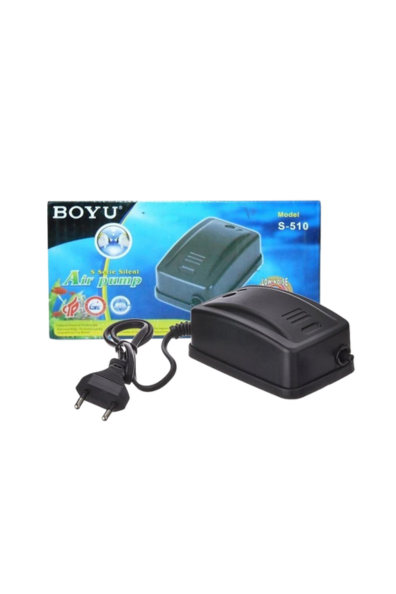

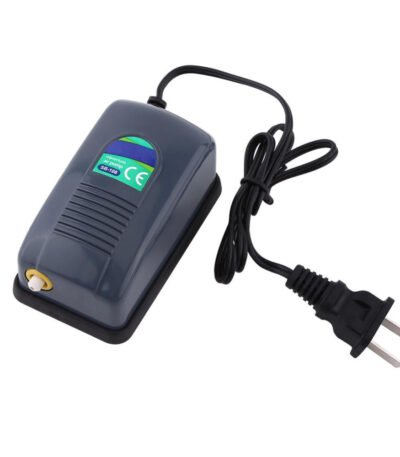
Dophin Air Pump
₹290.00 – ₹800.00Price range: ₹290.00 through ₹800.00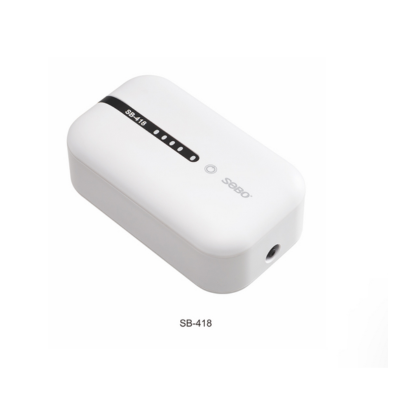
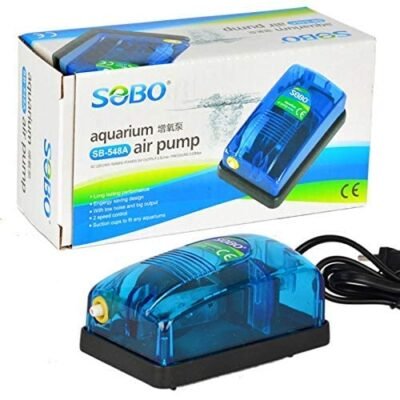
Aquarium Air Pump: The Key to Healthy Freshwater Fish Tanks
A reliable aquarium air pump is the lifeline of every freshwater fish tank. Without steady aeration, dissolved oxygen drops quickly, fish start gasping at the surface, and the beneficial bacteria in your filter begin to die off.
Every tank needs consistent airflow to stay healthy, whether it’s a 30 litre desktop setup in a Hyderabad apartment or a 300 litre aquarium in a Bangalore living room. This guide covers how aquarium air pumps work, how to size one correctly, when to choose a battery model, and which accessories complete a proper setup.
Why Dissolved Oxygen Is Non-Negotiable
Fish breathe dissolved oxygen, not air bubbles. That oxygen is absorbed at the water’s surface, where water meets open air. When the surface is still, this exchange slows to almost nothing, and fish start to struggle.
A good aquarium air pump drives surface agitation. Bubbles from the airstone rise and disturb the surface, which speeds up oxygen absorption and releases excess carbon dioxide. Below 6 mg/litre of dissolved oxygen, fish swim erratically, gasp near the surface, or lose colour. Goldfish and livebearers are especially sensitive.
This risk rises in Indian summers. When water climbs above 28°C, oxygen dissolves less efficiently, so warm, heavily stocked tanks need extra aeration.
How Does an Aquarium Air Pump Work?
An aquarium air pump doesn’t push oxygen into the water directly. It pushes atmospheric air through tubing into an airstone, which breaks it into fine bubbles. As each bubble rises and pops at the surface, it disturbs the surface film — that’s where gas exchange actually happens.
Placing an airstone deeper gives bubbles more travel time and creates stronger turbulence. The standard home setup is a pump outside the tank connected to a submerged airstone by airline tubing.
Diaphragm vs Piston Aquarium Air Pumps
Diaphragm Air Pumps
Found in over 90 percent of home aquariums, diaphragm pumps use an electromagnetic motor to vibrate a rubber membrane 50–60 times a second, pushing air out through the outlet. They’re affordable, quiet, and available in single- or dual-outlet versions, and work well for tanks up to about 200 litres.
Lifespan and Maintenance
The rubber diaphragm wears out over 12–24 months of continuous use. Most brands sell spare diaphragm kits, so you can replace the membrane instead of buying a new pump.
Piston Air Pumps
Piston pumps use a motor-driven cylinder for higher-pressure output. They’re louder and pricier, but far more powerful — ideal for fish rooms running multiple tanks off one manifold, or deep tanks where diaphragm pumps struggle past 60 cm of water. For a single home tank, though, a diaphragm model is usually enough.
Choosing the Right Size for Your Tank
An undersized pump can’t oxygenate the water; an oversized one creates turbulence that stresses slow fish and uproots plants. The standard guideline: deliver 2.5 to 5 times your tank’s volume in litres per hour. A 100 litre tank, for example, needs 250–500 L/hr.
| Tank Size | Minimum Flow | Maximum Flow | Best Setup |
|---|---|---|---|
| 30–50 L | 75–125 L/hr | 150–250 L/hr | Single outlet |
| 60 L | 150 L/hr | 300 L/hr | Single outlet |
| 100 L | 250 L/hr | 500 L/hr | Single/dual outlet |
| 150 L | 375 L/hr | 750 L/hr | Dual outlet |
| 200 L | 500 L/hr | 1,000 L/hr | Dual outlet |
| 300 L | 750 L/hr | 1,500 L/hr | Dual outlet/piston |
Goldfish tanks need about 20 percent more airflow than this baseline, since goldfish produce more waste and use oxygen faster. Planted tanks with lighter fish loads can sit at the lower end.
In Chennai, Hyderabad, and Pune, tanks routinely hit 30–33°C in May and June. At that temperature, run your pump at roughly 1.5 times the normal minimum, or add a second airstone at a different depth to spread oxygen more evenly.
Battery Aquarium Air Pumps: A Safety Net for Indian Homes
Power cuts are common across Indian cities, especially in summer. When the power goes, your air pump and filter stop, and oxygen depletion begins within minutes in a warm, stocked tank — one that can lose its oxygen buffer within one to two hours.
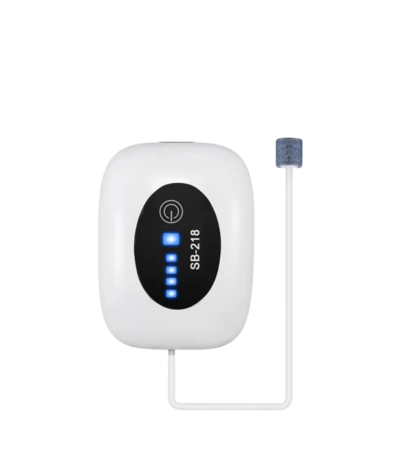
A battery-operated aquarium air pump is the simplest safety net. It charges via AC power normally and switches to a built-in rechargeable battery when power fails. A 2,600 mAh unit can run up to 70 hours in interval mode, or 20–30 hours continuously — enough for any typical outage.
These pumps also double as travel aerators, keeping fish oxygenated in transit between a store and home, especially during hot Indian drives.
Essential Accessories
Airline tubing connects the pump to the airstone. Keep runs short and free of kinks, since longer or kinked tubing adds resistance and cuts flow.
Airstones break air into fine bubbles. Ceramic stones give finer bubbles than plastic, and disc-shaped stones spread bubbles more evenly. Replace them every three to six months, as mineral deposits and algae clog the pores and reduce output.
Check valves are essential safety accessories. Fitted into the tubing between pump and tank, they stop water from siphoning back and flooding the pump when the power cuts — which can damage the pump or create a fire risk. Always use one, especially if the pump sits at or below water level.
T splitters and flow control valves let one pump feed two airstones or tanks, with independent flow adjustment on each arm — useful when balancing a sponge filter against a decorative bubbler.
Tips for Quieter Operation
Set the pump on foam or a rubber mat rather than a hard shelf to absorb vibration, and keep it clear of anything it could rattle against. Make sure the airline tubing isn’t kinked — back pressure makes the pump work harder and louder. If noise increases over time, the diaphragm is likely wearing out; replacing it usually restores quiet running.
Frequently Asked Questions
What size aquarium air pump do I need for a 100 litre tank? Look for 250–500 L/hr. Choose the higher end if your tank runs warm in summer or holds goldfish.
Can I run one pump across two tanks? Yes — use a T splitter with flow control valves, as long as the pump’s total output covers both tanks’ combined minimum.
Is a battery air pump really necessary in India? Strongly recommended. Summer power cuts can run from 30 minutes to several hours, and a warm, stocked tank loses safe oxygen levels fast.
What is a check valve, and do I need one? A one-way valve that stops water siphoning back into the pump during a power cut. Every setup should include one, especially with the pump at or below water level.
How often should I replace the airstone? Every three to six months, or sooner if bubble output drops or the pump gets noisier.
Can I use an air pump in a CO2 planted tank? Yes, but run it on a timer at night, after CO2 injection stops, so it doesn’t drive off CO2 that plants need during the day.
Author Written by Pavan, co-founder of Ocean Paws and aquarium specialist with 20 years of hands-on fishkeeping experience.


