 Dog Grooming Products
How to Put on a Dog Harness Correctly

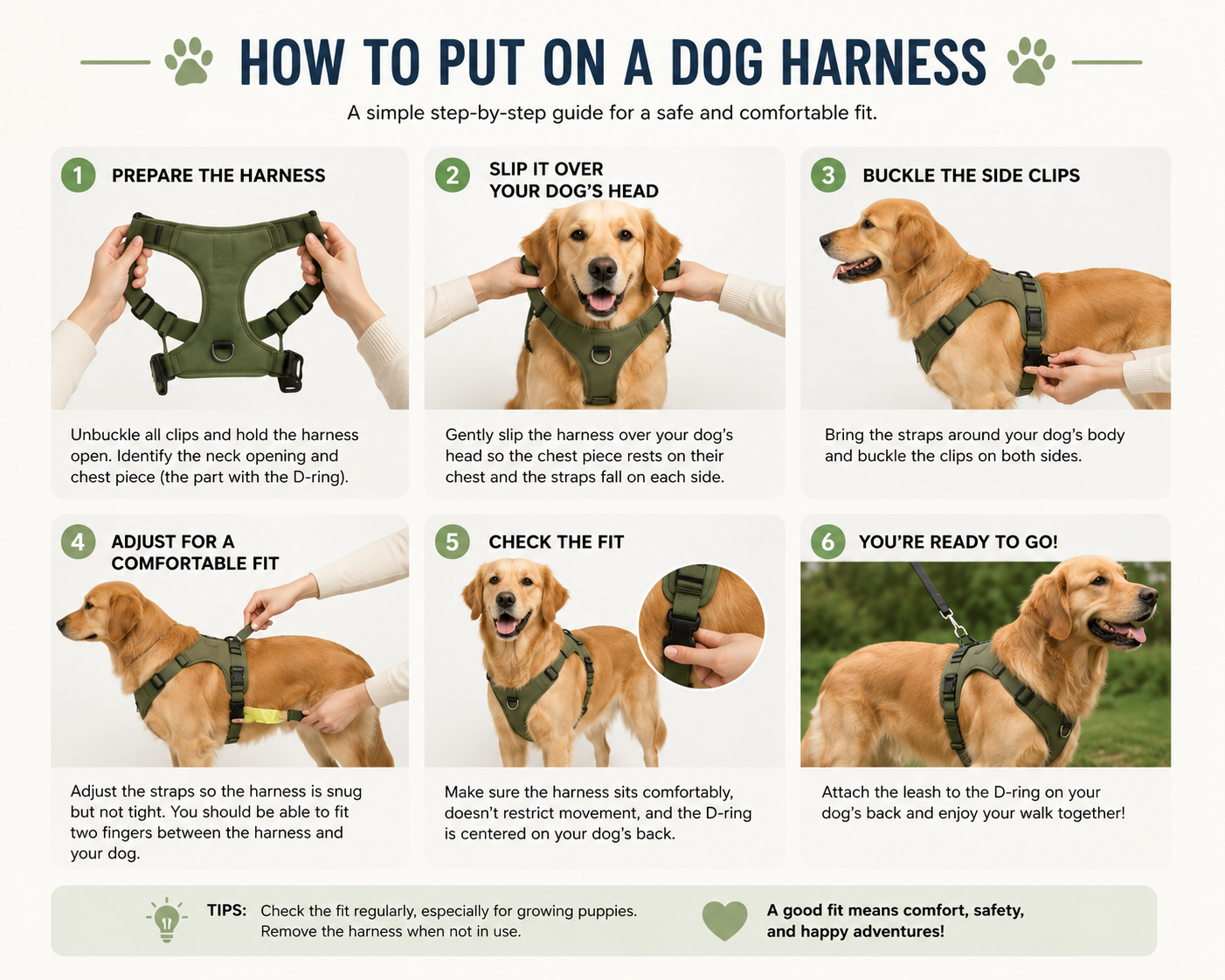
If you have ever tried to put a harness on an overexcited dog, you already know what the experience looks like. One leg goes in, your dog does a full spin, and suddenly neither of you knows what is happening. It is one of those things that looks simple on paper but feels anything but simple in the moment. Learning how to put on a dog harness properly changes all of that. It makes your daily walks safer, smoother, and a whole lot less stressful for both of you.
Harnesses have become the preferred choice for millions of dog owners across India and around the world. Unlike collars, they distribute pressure across the chest and shoulders rather than concentrating it at the neck. This means less strain on your dog and better control for you, especially on busy streets or crowded parks. A harness only delivers these benefits, however, when it fits well and is worn correctly every single time.
Choosing the Right Type of Harness
Before you can learn how to put on a dog harness, you need to pick the right one for your dog. There are three main types you will come across, and each one goes on slightly differently.
The back clip harness is the most popular option. The leash attaches at the top, over the dog’s back. It is easy to put on and works beautifully for calm, well trained dogs. The front clip harness has the leash ring sitting on the chest instead. This gives you more steering control during a walk, making it a great choice for dogs that tend to pull. Finally, the step in harness requires your dog to step both front paws into two loops before you clip it closed over the back. Many dogs actually prefer this style because nothing goes over their head at all.
For most everyday pet owners, a back clip or step in harness is the most practical option to start with.
Getting the Fit Right Before You Begin
Fit is everything with a harness. A harness that is too loose will shift around during the walk and cause rubbing. One that is too tight will restrict your dog’s movement and create discomfort after just a few minutes outside.
To measure correctly, use a soft measuring tape around the widest part of your dog’s chest and also around the neck. Every brand has its own size chart, so always measure rather than guessing by breed. A size called “medium” on one harness may fit very differently on another.
Once the harness is on, the golden rule is the two finger test. You should be able to slide two fingers comfortably under any strap around your dog’s body. If you cannot fit two fingers under, the harness is too tight. If your fingers slide through with room to spare, loosen it up.
How to Put on a Dog Harness Step by Step
This is the part most people want to get to. Here is how to put on a dog harness based on the type you are using.
For a back clip or overhead harness: Ask your dog to sit or stand calmly in front of you. Open the harness and slip the larger loop over your dog’s head so it rests around the neck. The chest panel should sit flat against the front of the body. Take the side straps and bring them under the belly. Clip them securely at the back. Check all straps and adjust until the fit is snug but comfortable.
For a step in harness: Lay the harness flat on the floor with the two loops open and separated. Guide your dog to step one front paw into each loop. Lift the harness gently up along the legs and fasten the buckle at the back. Adjust the straps evenly on both sides and do your two finger check.
For a front clip harness: The process is the same as the back clip style, but pay extra attention to the chest panel. It needs to sit flat and centred against the chest. The metal ring for the leash should face outward and away from the body. If it is twisted or sitting off to one side, the harness is not positioned correctly.
Mistakes That Most Dog Owners Make
Taking a few extra seconds here prevents a lot of problems later. The most common issue is a twisted strap. Before you put the harness on your dog, hold it up and look at it carefully. Harnesses often come out of the wash tangled or crossed, and it is easy to miss this when you are in a rush.
Another mistake is letting the neck opening sit too high, pressing against the throat. It should rest comfortably below the base of the throat. If your dog seems stiff or starts coughing during a walk, this is often the reason.
Also remember to check the fit regularly. Growing puppies and dogs that are gaining or losing weight will need harness adjustments every few weeks. Make it a habit to do a quick fit check at the start of each walk.
Helping Your Dog Get Comfortable with a Harness
Knowing how to put on a dog harness is only half the work. The other half is helping your dog feel good about wearing one.
Start by letting your dog sniff the harness for a few days without putting it on. Then try resting it on their back for a moment and giving a treat immediately. Build up slowly, session by session, until your dog is relaxed throughout the whole process. Treats, calm praise, and patience go a long way here. Never force the harness on or chase your dog around the house to get it fitted. That creates anxiety around something that should feel completely normal.
Your Pre Walk Checklist
Before you head out the door, run through these four things every time. Are all the clips fastened? Is the leash attached to the correct ring? Can you fit two fingers under each strap? Is the chest panel sitting flat and centred?
Learning how to put on a dog harness correctly becomes second nature faster than you might expect. Within a week of practice, the whole process takes under a minute. Your dog will be comfortable, secure, and ready for the walk. And honestly, so will you.


