 Dog Grooming Products
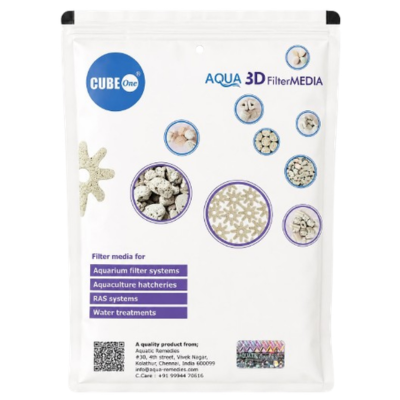
Cube One Ceramic Rings Biological Filter Media for Marine and Freshwater Aquariums
Author Written by Pavan, co-founder of Ocean Paws and aquarium specialist with 20 years of hands-on fishkeeping experience.
Last Updated July 5, 2026
The Ceramic Rings That Every Aquarium in India Actually Needs
Every aquarium keeper in India, whether you are just starting out or you have been running reef tanks for decades, eventually arrives at the same conclusion. The single most important investment you can make in your aquarium is not the lighting, not the skimmer, and not the livestock. It is the quality of your biological filtration. The Cube One Ceramic Rings are built around this exact understanding.
These ceramic rings by Aquatic Remedies are manufactured using heat processed, high quality ceramic material that is riddled with millions of microscopic pores. Each of those pores becomes a home for the beneficial bacteria that your aquarium depends on to stay alive, stable, and crystal clear. Whether your tank is a thriving reef system packed with SPS corals, a freshwater planted aquarium, or a large koi pond, the Cube One Ceramic Rings give beneficial bacteria exactly what they need to establish themselves and do their work.
What Are Ceramic Rings and Why Does Your Aquarium Need Them
Ceramic rings are small, cylindrical pieces of porous ceramic material that are placed inside your aquarium filter. Their purpose is entirely biological. They do not filter water mechanically by trapping particles and they do not work chemically like activated carbon. Instead, their entire function is to provide an enormous amount of physical surface area where colonies of nitrifying and denitrifying bacteria can grow, multiply, and process the toxic waste compounds that your fish and livestock produce every single day.
Without sufficient biological filtration, ammonia produced by fish waste, uneaten food, and decaying organic matter accumulates in the water. Even at concentrations of just 0.25 parts per million, ammonia is acutely toxic to fish. It burns their gills, suppresses their immune systems, causes neurological damage, and ultimately kills them. The beneficial bacteria that colonize your ceramic rings are the only sustainable, long term solution to this problem. Water changes slow the accumulation of these toxins, but only a well established bacterial colony can convert them continuously and automatically.
The Cube One Ceramic Rings from Aquatic Remedies are designed to give those bacterial colonies the best possible home. As a result, your aquarium achieves water quality stability that simply cannot be replicated through water changes or chemical treatments alone.
Cube One Ceramic Rings Product Overview and Key Features
Heat Processed High Quality Ceramic Construction
The Cube One Ceramic Rings are manufactured through a carefully controlled heat processing method. During this process, raw ceramic material is fired at high temperatures that create a stable, inert, and deeply porous internal structure. This heat processing is what gives the rings their characteristic white or cream coloration and their hard, durable surface. Furthermore, the heat treatment ensures that the final product is completely free of any organic contaminants, binders, or chemicals that could leach into your aquarium water and harm your livestock.
The result is a ceramic ring that is chemically inert, pH neutral, and safe for use in the most sensitive aquarium environments including reef tanks housing delicate stony corals, shrimps, and other invertebrates.
Millions of Microscopic Pores for Maximum Bacterial Surface Area
The defining technical feature of any ceramic ring is its pore structure, and the Cube One Ceramic Rings are built with this firmly in mind. Each individual ring contains millions of microscopic pores running throughout its entire structure. Water flows not just around the outside of each ring but also through its hollow center and into the porous walls, dramatically increasing the contact time between aquarium water and the bacteria living in and on the ring.
This porous architecture is what separates high quality ceramic rings from cheap, low grade alternatives. Lesser ceramic rings have smooth, non porous surfaces that offer minimal real world bacterial surface area. The Cube One Ceramic Rings, by contrast, provide the rough, complex, and deeply porous surface that beneficial bacteria specifically prefer for attachment and colony formation.
100 Percent Natural Material Composition
The Cube One Ceramic Rings are made entirely from natural ceramic material. There are no synthetic binders, plastic additives, or artificial coatings. This matters because many cheaper ceramic rings on the Indian market are manufactured with substandard materials that may include organic binders or chemical stabilizers that gradually leach into aquarium water. These leachates can disrupt the pH balance of a marine system, interfere with coral calcification, and stress sensitive fish species.
With the Cube One Ceramic Rings, you are placing a completely natural and biologically inert substrate into your filtration system. Your water chemistry remains under your control.
Accelerates New Tank Cycling
One of the most frustrating experiences for any new aquarium keeper is the wait time during the initial nitrogen cycle of a new tank. Without established beneficial bacteria, ammonia spikes rapidly and no livestock can be safely introduced. The Cube One Ceramic Rings dramatically accelerate this process by providing an immediately available substrate with enormous surface area for bacterial colonization.
In practical terms, a new tank set up with Cube One Ceramic Rings as the primary biological media will cycle faster than a tank using inferior media or no dedicated biological media at all. Moreover, if you move ceramic rings from an established tank into a new one, those rings carry with them the living bacterial colony already housed in their pores. This is called seeding, and it can reduce a new tank’s cycling time from six weeks down to one to two weeks in many cases.
Compatible with All Major Filtration Systems
The Cube One Ceramic Rings are sized and shaped to fit seamlessly into every common aquarium filtration system used by Indian hobbyists. They work in canister filters, sump systems, overhead trickle filters, hang on back filters, and undergravel filter setups. They can also be placed in mesh media bags and positioned directly in a sump chamber, a refugium, or even submerged directly in the aquarium where flow is available. This versatility makes them a genuinely universal solution for biological filtration across every tank type and size.
Technical Specifications at a Glance
Material: Heat processed porous ceramic, 100 percent natural
Composition: Fully inert, pH neutral, no chemical additives
Pore Structure: Millions of microscopic pores throughout entire ring structure
Primary Function: Biological filtration through bacterial colonization
Bacteria Supported: Aerobic nitrifying bacteria (Nitrosomonas, Nitrospira) and anaerobic denitrifying bacteria
Compounds Processed: Ammonia, nitrite, nitrate
Compatible Systems: Canister filter, sump filter, overhead trickle filter, hang on back filter, undergravel filter, media bag in tank
Suitable Environments: Marine aquariums, reef tanks, freshwater aquariums, planted tanks, ponds, Arowana tanks, Discus tanks, Flowerhorn tanks, shrimp tanks
Country of Origin: India by Aquatic Remedies
Lifespan: Multi year, indefinite with proper maintenance
How the Nitrogen Cycle Works Inside Your Ceramic Rings
Understanding what happens inside your ceramic rings makes it far easier to use them correctly and get the best possible results from your filtration system. The nitrogen cycle is the biological process that every aquarium depends on for survival.
Stage One: Ammonia Enters the System
Every living thing in your aquarium produces ammonia. Fish excrete it directly through their gills as a byproduct of protein metabolism. They also produce it through urine and feces. Uneaten food breaks down into ammonia as it decays. Even dead plant matter contributes to ammonia loading. In a tank without established biological filtration, ammonia accumulates rapidly to dangerous and then lethal levels.
Stage Two: Nitrosomonas Bacteria Convert Ammonia to Nitrite
The first group of beneficial bacteria to colonize your Cube One Ceramic Rings are the Nitrosomonas species. These aerobic bacteria consume dissolved oxygen from the water and use it to oxidize ammonia into nitrite. While nitrite is less immediately toxic than ammonia, it is still highly dangerous to fish. Even at concentrations of just 0.3 parts per million, nitrite begins interfering with oxygen transport in fish blood, causing a condition known as brown blood disease that is frequently fatal.
Nitrosomonas bacteria colonize the outer surface layers of your ceramic rings first because that is where dissolved oxygen levels are highest. Therefore, the outer pores of each ring support the first stage of the nitrogen cycle.
Stage Three: Nitrospira Bacteria Convert Nitrite to Nitrate
The second group of bacteria to establish themselves in your ceramic rings are the Nitrospira species. These bacteria convert nitrite into nitrate. Nitrate is substantially less toxic than either ammonia or nitrite. Most healthy fish can tolerate nitrate at levels of 20 to 40 parts per million without showing obvious signs of stress, though reef invertebrates and corals prefer levels below 5 parts per million.
Nitrospira bacteria also prefer aerobic conditions, so they colonize the outer and mid depth pore layers of each ceramic ring alongside the Nitrosomonas population.
Stage Four: Denitrifying Bacteria Convert Nitrate to Nitrogen Gas
Deep within the inner pore structure of each Cube One Ceramic Ring, dissolved oxygen levels are significantly lower because the outer bacterial layers have already consumed much of the available oxygen. This creates a low oxygen microenvironment that supports the growth of anaerobic denitrifying bacteria. These bacteria complete the nitrogen cycle by converting nitrate into harmless nitrogen gas, which then escapes from the water surface into the atmosphere.
Therefore, a well established bed of Cube One Ceramic Rings does not simply reduce ammonia and nitrite. It processes the entire nitrogen cycle from end to end, dramatically reducing nitrate accumulation and reducing the frequency and volume of water changes required to maintain water quality.
How to Use Cube One Ceramic Rings in Your Aquarium
Step One: Initial Rinse Before Installation
Before placing the Cube One Ceramic Rings in your filter, rinse them thoroughly under clean tap water or reverse osmosis water. This step removes the fine ceramic dust that naturally accumulates during manufacturing and packaging. If you skip this step, the dust may cloud your aquarium water temporarily. Do not use any detergent, soap, or chemical cleaner during this rinse because any residue left on the rings will harm the bacteria you are about to cultivate.
Step Two: Correct Placement Within Your Filter
The placement of your ceramic rings within your filtration system has a significant impact on their performance. In a canister filter, ceramic rings should be placed in the biological media tray, which is typically the middle or second stage of the filter. Mechanical filter media such as sponges and filter wool should come before the ceramic rings so that they trap large particles of debris before the water reaches the ceramic rings. This prevents the microscopic pores on the ring surfaces from clogging with detritus.
In a sump filter, place the ceramic rings in a dedicated biological chamber where water passes through steadily. Putting them in a media bag makes this easier to manage and allows you to lift the rings out for maintenance without disturbing the rest of the sump.
In an overhead trickle filter, position the rings in the trickle area where water drips or flows over them. This wet and dry style of biological filtration is particularly effective because it exposes the ceramic rings to both water and air, maximizing the oxygen availability that aerobic nitrifying bacteria need.
Step Three: Allow Time for Full Bacterial Colonization
Once your ceramic rings are in place, patience is required. Beneficial bacteria do not appear instantly. In a new aquarium, the full cycling process typically takes between four and eight weeks depending on water temperature, pH, oxygen levels, and the initial ammonia source. During this period, ammonia levels will rise first, followed by a nitrite peak, and then both will gradually fall to zero as the bacterial populations mature and stabilize.
You can significantly speed up this process by adding a commercial nitrifying bacteria supplement at the same time as you install the rings. Additionally, if you have access to ceramic rings from an established, healthy aquarium, placing a small quantity of those seeded rings alongside your new Cube One Ceramic Rings will dramatically accelerate bacterial colonization through a process of inoculation.
Step Four: Temperature and pH Optimization for Best Results
Beneficial bacteria are living organisms and their activity levels are strongly influenced by environmental conditions. Nitrifying bacteria perform best at water temperatures between 25 and 30 degrees Celsius, which fortunately overlaps perfectly with the ideal temperature range for most tropical marine and freshwater species. At temperatures below 10 degrees Celsius, bacterial activity slows dramatically. At temperatures above 40 degrees Celsius, bacteria begin to die.
pH also plays an important role. Nitrifying bacteria prefer a pH range of 7.5 to 8.5, which makes them naturally well suited to marine aquariums where pH typically sits between 8.1 and 8.3. In freshwater aquariums with lower pH, bacterial activity can be somewhat reduced, though the bacteria still function effectively above pH 6.5.
Step Five: Long Term Maintenance
Ceramic rings require remarkably little maintenance compared to mechanical or chemical filter media. Every three to four months, inspect your ceramic rings and gently rinse them in a bucket of used aquarium water if you notice that the pores appear clogged with brown mulm or detritus. Never rinse the rings under tap water after they have been colonized by bacteria because the chlorine in tap water will kill the bacterial colony and force you to re cycle your tank from scratch.
Importantly, never allow colonized ceramic rings to dry out completely. The bacteria living in the pores cannot survive desiccation. During any maintenance procedure, keep the rings in a bucket of aquarium water and return them to the filter as quickly as possible.
Under normal conditions, the Cube One Ceramic Rings will last for many years without needing replacement. Unlike chemical filter media such as activated carbon, ceramic rings do not become depleted over time. The bacterial colony they support simply grows and self regulates in response to the bioload of your aquarium.
Why Cube One Ceramic Rings Outperform the Competition in India
Indian aquarium hobbyists today have access to ceramic rings from a wide range of brands including imports from Singapore, Germany, and China as well as several domestic alternatives. So understanding what makes the Cube One Ceramic Rings the better choice for Indian hobbyists is important before you make your purchase.
Cube One Ceramic Rings vs Generic White Ceramic Rings
The most commonly available ceramic rings in India are generic white ceramic rings sold in bulk with no brand identity, no manufacturing standards, and no quality consistency. These generic rings are typically made using low grade ceramic material that is dense rather than porous. Their smooth, non porous walls offer minimal surface area for bacterial colonization and they often fail to support a robust bacterial colony even after months of use. The Cube One Ceramic Rings, by contrast, are manufactured to a consistent standard with genuine microporosity throughout the ring structure.
Cube One Ceramic Rings vs Imported Ceramic Media
Several premium imported ceramic media products are available in India through retailers such as Aquariums India and others. Products from brands such as Ocean Free, BOYU, and others carry significant price premiums due to import duties, shipping costs, and distributor margins. The Cube One Ceramic Rings, as a made in India product by Aquatic Remedies, deliver comparable biological filtration performance at a price point that makes them accessible to every Indian aquarium keeper, from the hobbyist running a 50 litre freshwater tank to the serious reefer managing a 500 litre marine system.
Cube One Ceramic Rings vs Bio Balls
Bio balls are plastic media with a complex surface structure designed for biological filtration. While they work, they have a significant limitation. Over time, bio balls that are used in submerged filter systems trap detritus and uneaten food between the ball structures. This trapped organic material becomes a nitrate factory, continuously leaching nitrate into the water and undermining the very purpose of biological filtration. Ceramic rings, when positioned correctly with mechanical pre filtration ahead of them, do not suffer from this problem to the same degree because water flows through each individual ring rather than just around a large mass of tangled plastic.
Cube One Ceramic Rings vs Foam Sponge Filters
Foam sponge filters are an excellent and cost effective mechanical pre filter. However, foam provides significantly less surface area for bacterial colonization compared to high quality porous ceramic rings. Foam also degrades over time and needs to be replaced periodically, whereas the Cube One Ceramic Rings are permanent media that last indefinitely with proper care. Furthermore, foam filters have no internal pore structure capable of supporting the low oxygen anaerobic denitrification zones that ceramic rings can develop deep within their pore channels.
Benefits of Using Cube One Ceramic Rings in Your Aquarium
Stable Zero Ammonia and Nitrite Readings
The dense, well established bacterial colony supported by Cube One Ceramic Rings continuously processes ammonia and nitrite as fast as it is produced, keeping both parameters at zero under normal stocking and feeding conditions.
Reduced Water Change Frequency
As the anaerobic bacterial zones within the deep ring pores develop and begin denitrifying nitrate, the rate of nitrate accumulation in your aquarium slows measurably. Many hobbyists find that regular water change intervals can be extended once a mature ceramic ring bed is established.
Faster Tank Cycling
The enormous porous surface area available for bacterial attachment means that new tanks set up with Cube One Ceramic Rings cycle faster than tanks relying on less effective media. This gets your aquarium ready for livestock sooner.
Suitable for the Most Demanding Livestock
Arowana, Discus, and Flowerhorn fish are notoriously sensitive to water quality and particularly to ammonia and nitrite. Cube One Ceramic Rings are specifically recommended for these demanding species because the bacterial colonies they support are robust enough to handle the high bioload these large fish produce.
Permanent Filter Media
Unlike activated carbon, zeolite, or chemical filter resins that become exhausted and must be replaced every few weeks or months, Cube One Ceramic Rings are permanent. You buy them once and they serve your tank for years. This makes them genuinely cost effective over the long term.
Made in India for Indian Aquarium Conditions
Aquatic Remedies products are formulated and manufactured with Indian aquarium conditions in mind. Indian municipal tap water quality, Indian ambient temperatures, and the specific fish species most popular with Indian hobbyists have all influenced the design and specification of the Cube One product range.
Safe for All Aquarium Inhabitants
Because the ceramic material is 100 percent natural and chemically inert, these rings are completely safe for fish, corals, anemones, shrimps, snails, crabs, echinoderms, and every other aquarium organism you might keep.
Frequently Asked Questions About Cube One Ceramic Rings
How long do Cube One Ceramic Rings take to become effective?
Ceramic rings begin to support measurable bacterial populations within the first week of installation as bacteria from the water column begin to settle onto the ring surfaces. However, full colonization and stable ammonia and nitrite removal typically takes four to eight weeks in a new aquarium. In an established tank, the rings can become effective much faster because seeding bacteria from the existing tank are already present in the water.
How many ceramic rings do I need for my aquarium?
A general guideline is to provide approximately 100 to 150 grams of ceramic rings per 50 liters of aquarium water for a moderately stocked tank. Heavily stocked tanks, tanks with large fish, or tanks with frequent heavy feeding should use proportionally more media to provide the additional bacterial capacity required to process the higher bioload.
Can I use Cube One Ceramic Rings in a marine reef tank?
Absolutely yes. The Cube One Ceramic Rings are chemically inert and will not affect calcium, alkalinity, magnesium, or pH levels in a marine system. They are particularly valuable in reef tanks that have minimal live rock, as they compensate for the reduced biological filtration surface area that live rock would otherwise provide.
Should I use ceramic rings alone or with other filter media?
Ceramic rings work best as part of a multi stage filtration approach. Mechanical pre filtration using sponge or filter wool should always come before the ceramic rings to prevent debris from clogging the pores. After the ceramic rings, optional chemical media such as activated carbon or phosphate remover can be added for polishing. This layered approach gives the best overall water quality results.
How often should I clean my Cube One Ceramic Rings?
Clean them gently in used aquarium water every three to four months, or when you notice visible clogging with brown mulm that is restricting water flow through the filter. Never clean them with tap water, hot water, or any cleaning agent. Never clean all of your ceramic rings at the same time because doing so removes too much of your established bacterial colony at once and can trigger a mini cycle in an established tank.
Can Cube One Ceramic Rings be used in a shrimp tank?
Yes. These rings are made from 100 percent natural ceramic with no chemical additives, making them completely safe for shrimp and other invertebrates that are highly sensitive to water chemistry changes. They are an excellent choice for shrimp tanks where stable water parameters are critical to breeding success.
What happens if my ceramic rings dry out accidentally?
If the rings dry out completely, the bacteria living in the pores will die because nitrifying bacteria cannot survive without water and oxygen simultaneously. The rings themselves are not damaged and can be re used by simply reintroducing them to the filter and allowing the tank to re cycle. Always keep colonized rings submerged or moist during any maintenance work.
Can I move my Cube One Ceramic Rings to a new tank to cycle it faster?
Yes, and this is one of the most valuable practical uses of established ceramic rings. Moving rings from a fully cycled established tank into a new tank introduces a ready made bacterial population that dramatically shortens the cycling time of the new tank, often reducing it from six to eight weeks down to one to two weeks.
How do Cube One Ceramic Rings compare to ceramic rings sold by competitors in India?
The Cube One Ceramic Rings are manufactured by Aquatic Remedies, one of India’s most established and trusted aquarium product brands. They are made using heat processed high quality ceramic with genuine microporosity throughout the ring structure. Many competing products available in India, particularly unbranded bulk ceramic rings, are made with dense, low porosity ceramic that offers significantly less effective surface area for bacterial colonization. While some imported premium media brands offer excellent quality, they come at a much higher price due to import costs.
How to Get the Best Results from Cube One Ceramic Rings in a Marine Aquarium
Marine aquariums are a particularly demanding environment for biological filtration because the livestock kept in reef systems, including SPS corals, LPS corals, soft corals, anemones, clownfish, tangs, and wrasses, are far more sensitive to water parameter fluctuations than most freshwater species. Therefore, maximizing the effectiveness of your Cube One Ceramic Rings in a marine setting requires some specific considerations.
First, always position the ceramic rings in an area of the sump or filter where water flow is steady but not turbulent. Turbulent flow can dislodge bacterial biofilm from the ring surfaces before it has time to mature. Gentle, continuous flow through the rings is ideal.
Second, consider combining Cube One Ceramic Rings with a refugium setup. When a refugium growing macroalgae such as Chaetomorpha is used alongside ceramic rings, the macroalgae absorbs nitrate through photosynthesis while the ceramic rings handle ammonia and nitrite conversion. Together, these two biological systems can achieve near zero nitrogen compound levels in a well managed reef tank.
Third, in a new reef tank, dose a commercial marine specific nitrifying bacteria product alongside your ceramic rings during the cycling phase. This combination of physical substrate and live bacterial inoculant produces the fastest and most reliable cycling results available to Indian reef keepers.
Where to Buy Cube One Ceramic Rings in India
The Cube One Ceramic Rings by Aquatic Remedies are available from Ocean Paws at www.oceanpaws.in. As a dedicated marine aquarium store, Ocean Paws stocks the full Aquatic Remedies product range and provides expert guidance on choosing the right quantity and combination of filter media for your specific tank setup. Because these are a made in India product, there are no long shipping waits or import duty surprises. Your order ships quickly and arrives in perfect condition.
Final Thoughts on Cube One Ceramic Rings
Biological filtration is not a luxury or an optional upgrade. It is the absolute foundation of every healthy aquarium. Without a robust and mature biological filter, nothing else you do for your tank will matter in the long run. The fish will suffer, the corals will struggle, and the water will never truly clear.
The Cube One Ceramic Rings give you the foundation that every aquarium deserves. They are built from high quality heat processed ceramic, manufactured in India by a brand that understands Indian aquarium keeping conditions, priced accessibly for every budget, and backed by the science of beneficial bacteria and the nitrogen cycle. Whether your tank is six liters or six hundred liters, whether you keep goldfish or giant clams, the Cube One Ceramic Rings are the biological filtration solution your filter needs.
Start your tank right. Upgrade your existing filter. Seed a new system faster. The Cube One Ceramic Rings make every one of these tasks simpler and more effective than any alternative available at this price point in India today.
Disclaimer This product page is intended for informational purposes. Always follow the product instructions included in the packaging. Water parameters should be tested regularly using a reliable aquarium test kit to monitor the effectiveness of biological filtration in your specific aquarium setup.
Author Written by Pavan, co-founder of Ocean Paws and aquarium specialist with 20 years of hands-on fishkeeping experience.
Last Updated July 5, 2026


