 Dog Grooming Products
Filter by category
Showing all 4 results
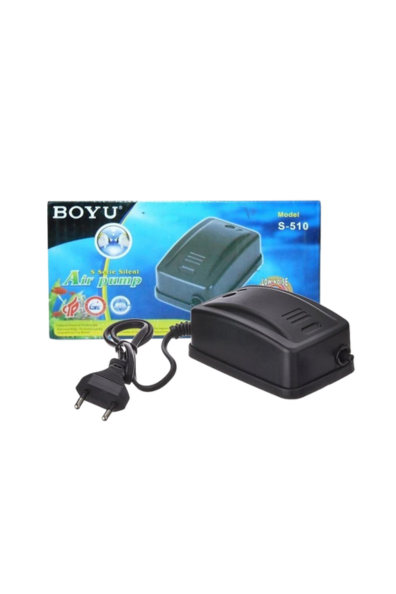

Dophin Air Pump
₹290.00 – ₹800.00Price range: ₹290.00 through ₹800.00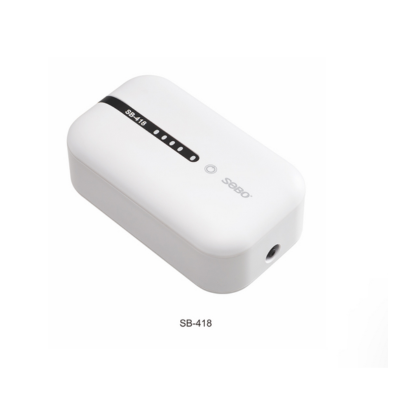
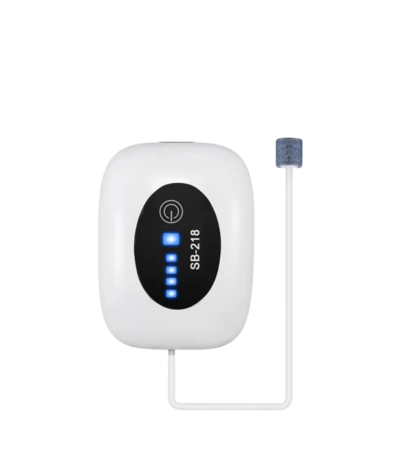
Aquarium Pump Air for Healthy Freshwater Fish Tanks
A reliable aquarium pump air system is the lifeline of every freshwater fish tank. Without steady aeration, dissolved oxygen drops quickly, fish gasp at the surface, and the beneficial bacteria in your biological filter begin to die off. Every tank, from a small 30 litre desktop setup in a Hyderabad apartment to a 300 litre community aquarium in a Bangalore living room, depends on consistent airflow to stay healthy.
This guide covers everything you need before buying an aquarium pump air unit. You will learn how these pumps work, how to match flow rate to your tank size, when to pick a battery model, and what accessories complete a proper air pump setup.
Why Dissolved Oxygen Is Non Negotiable in Any Fish Tank
Fish breathe dissolved oxygen, not air bubbles. This is a detail many beginners miss. The oxygen your fish actually use is absorbed into the water at the surface, where water meets open air. When the surface is still and undisturbed, this exchange slows to almost nothing. Your fish start to struggle.
A good aquarium pump air setup drives surface agitation. Bubbles from the airstone rise through the water and create movement at the surface. That movement speeds up oxygen absorption and releases excess carbon dioxide at the same time.
When dissolved oxygen falls below 6 mg per litre, fish show signs of stress. They swim erratically, press close to the surface, or lose colour over time. Goldfish and livebearers are especially sensitive to low oxygen. Planted tanks with high fish loads face this risk too, especially during the hot Indian summer when water temperatures rise above 28 degrees Celsius and oxygen solubility in water drops sharply.
How an Aquarium Air Pump Actually Works
An aquarium pump air unit does not push oxygen into the water directly. It pushes atmospheric air through a tube and into an airstone or sponge filter. The airstone breaks that air into tiny bubbles, and those bubbles travel upward through the water column.
As each bubble rises and pops at the surface, it disturbs the surface film. That disturbance is where gas exchange happens. Oxygen enters the water. Carbon dioxide and other dissolved gases escape into the air above. The faster and more consistent that surface movement is, the more efficiently your tank breathes.
Placing an airstone deeper in the tank gives bubbles more travel time and creates stronger surface turbulence. A pump that sits outside the tank, connected to a submerged airstone by airline tubing, is the standard setup for most home aquariums in India.
Diaphragm vs Piston Air Pumps
Aquarium air pumps fall into two broad categories. Knowing the difference helps you pick the right unit for your situation.
Diaphragm Air Pumps
Diaphragm pumps are found in over 90 percent of home aquariums. An electromagnetic motor vibrates a flexible rubber membrane, typically 50 to 60 times per second. That rapid movement compresses and draws air, pushing it out through the outlet tube.
These pumps are affordable, quiet, and available in single outlet and dual outlet versions. Most models on the market today are diaphragm based. They work well for tanks up to about 200 litres when correctly matched to their flow rating.
The trade-off is diaphragm wear. The rubber membrane degrades over 12 to 24 months of continuous operation. Many brands include spare diaphragm kits so you can replace the membrane without buying an entirely new pump.
Piston Air Pumps
Piston pumps use a motor-driven cylinder to push air under higher pressure. They are louder, more expensive, and far more powerful than diaphragm models.
Hobbyists in India typically use piston pumps when running multiple tanks in a fish room or breeding setup. A single piston pump can distribute air to ten or more tanks through a shared manifold and tubing network. The high pressure output also makes them suitable for deep tanks where diaphragm pumps struggle to push air past 60 centimetres of water depth.
For most single-tank home setups, a diaphragm model gives you everything you need at a fraction of the cost.
Choosing the Right Aquarium Pump Air for Your Tank Size
Sizing your aquarium pump air unit correctly is one of the most important steps in any tank build. An undersized pump cannot oxygenate the water adequately. An oversized pump creates excessive turbulence that stresses slow moving fish and uproots delicate plants.
A widely used hobbyist guideline is that your air pump should deliver a minimum of 2.5 times your tank volume in litres per hour. The upper comfortable limit is around 5 times the tank volume. So a 100 litre tank needs between 250 and 500 litres per hour of airflow.
Here is a quick reference for common freshwater aquarium sizes used across India:
| Tank Size | Minimum Flow | Maximum Flow | Best Setup |
|---|---|---|---|
| 30 to 50 litres | 75 to 125 L/hr | 150 to 250 L/hr | Single outlet pump |
| 60 litres | 150 L/hr | 300 L/hr | Single outlet pump |
| 100 litres | 250 L/hr | 500 L/hr | Single or dual outlet pump |
| 150 litres | 375 L/hr | 750 L/hr | Dual outlet pump |
| 200 litres | 500 L/hr | 1,000 L/hr | Dual outlet pump |
| 300 litres | 750 L/hr | 1,500 L/hr | Dual outlet or piston pump |
These figures apply to a standard community fish tank with a moderate fish load. Goldfish tanks need about 20 percent more airflow because goldfish produce more waste and consume oxygen faster than most tropical fish. Heavily planted tanks with dense CO2 injection and lighter fish loads can operate comfortably at the lower end of the range.
Hot Indian Summers Change Your Flow Rate Requirement
Indian summers make a real difference to your tank’s oxygen needs. When water temperature climbs above 28 degrees Celsius, oxygen dissolves less efficiently. This is basic chemistry.
Hobbyists in cities like Chennai, Hyderabad, and Pune regularly see tank temperatures hit 30 to 33 degrees during May and June without a chiller. At that temperature range, you need to run your air pump at roughly 1.5 times the normal minimum to keep dissolved oxygen above 6 ppm safely.
If your tank runs warm in summer, size up your pump or add a second airstone at a different depth. Two airstones create more surface agitation than one and spread oxygen distribution far more evenly across the water column.
Battery Air Pumps: The Most Practical Safety Net for Indian Fish Keepers
This section matters a great deal if you keep fish anywhere in India.
Power cuts are a regular event across much of the country. Cities like Hyderabad, Delhi, Kolkata, and countless smaller towns still experience load shedding during summer months. When the power goes out, your aquarium pump air unit stops. The filter stops too. Oxygen depletion begins within minutes in a warm, densely stocked tank.
Fish can survive short cuts of one to two hours if the tank is lightly stocked and the water is cool. But a warm 30 degree tank with a heavy fish load has very little oxygen buffer at all.
A battery operated aquarium pump air unit is the single most practical safety net for Indian fish keepers. These pumps use built-in rechargeable lithium batteries that charge during normal AC power operation. When the power fails, the pump switches to battery mode and keeps the air moving.
A good rechargeable battery air pump with a 2,600 mAh battery can run for up to 70 hours in interval mode. Even in continuous mode, most models give you 20 to 30 hours of steady run time on a full charge. That covers any typical power cut with room to spare.
Battery pumps serve a second purpose too. If you are transporting fish from a store to your home or moving them between tanks, a battery air pump keeps the water oxygenated throughout the journey. This is especially useful for long drives in Indian summer heat when fish stress peaks quickly inside sealed bags.
Essential Accessories That Complete Your Air Pump Setup
An aquarium pump air unit alone is not a complete setup. The accessories you use alongside it determine how effectively it oxygenates your tank.
Airline Tubing
Flexible silicone airline tubing connects your pump to the airstone or sponge filter. Use the shortest run of tubing necessary to maintain pressure. Longer tubing creates resistance and reduces effective flow at the airstone. Keep the tube in a gentle curve rather than a tight kink.
Airstones
Airstones break air into fine bubbles. Ceramic airstones produce smaller bubbles than plastic ones and give better surface agitation for the same air volume. Disc shaped airstones spread bubbles more evenly across the base of the tank. Replace airstones every three to six months because the pores clog with mineral deposits and algae, cutting output over time.
Check Valves
A check valve is one of the most important safety accessories in any air pump setup. It is a small one-way valve that you fit into the airline tubing between the pump and the tank.
If the power cuts and the pump stops, water can siphon back up through the tubing and flood the pump, ruining it entirely. In the worst cases, water reaching the electrical internals creates a fire risk. A check valve blocks that backflow completely. Always use one, especially when your pump sits at or below the water line.
T Splitters and Flow Control Valves
T splitters let you run a single air pump to two airstones or two separate tanks. Flow control valves let you adjust the air going to each outlet independently. This is very useful when one outlet feeds a sponge filter and another feeds a decorative bubbler and you want to balance the airflow between them without buying a second pump.
Tips for Quieter Air Pump Operation
Diaphragm pumps can produce a low buzzing sound that carries in a quiet room, especially at night. A few simple steps reduce this significantly.
Place the pump on a folded piece of foam or a small rubber mat rather than directly on a shelf or table. This absorbs vibration before it transfers to the hard surface. Keep the pump away from glass or shelving edges it could knock against as it runs.
Check that the airline tubing is not kinked or under tension. Back pressure caused by a kinked tube makes the pump work harder and vibrate more noisily. A slightly longer loop in the tubing with a soft curve is quieter than a short, taut, straight run.
If your pump is getting louder over time, the diaphragm is wearing out. A worn diaphragm vibrates unevenly and creates more noise. Replacing the diaphragm or the unit restores quiet operation quickly.
Frequently Asked Questions About Aquarium Pump Air
What size aquarium pump air unit do I need for a 100 litre tank?
For a 100 litre tank, look for a pump rated between 250 and 500 litres per hour. A single outlet pump at the lower end of this range works well for light fish loads. If your tank runs warm in summer or holds goldfish, choose a model closer to the 500 L/hr mark for reliable oxygenation.
Can I run one air pump across two fish tanks?
Yes, you can. Use a T splitter to divide the air output between two tanks. A flow control valve on each arm lets you adjust the balance. Just make sure the total flow rating of your pump covers the combined minimum requirement of both tanks.
Is a battery air pump really necessary in India?
It is strongly recommended. Power cuts during summer months across most Indian cities can last 30 minutes to several hours without warning. A warm, stocked aquarium loses safe oxygen levels fast once aeration stops. A rechargeable battery air pump is a low-cost safety net that can save your fish during any unplanned outage.
What is a check valve and do I really need one?
A check valve is a small one-way valve that fits into the airline tubing between your pump and the tank. It stops water from siphoning back into the pump when the power goes out. Without one, water can travel up the tube, enter the pump, and damage or short-circuit it. Every air pump setup should include a check valve, especially when the pump sits at or below the water level.
How often should I replace the airstone?
Replace airstones every three to six months. Over time, mineral deposits and algae block the tiny pores, reducing bubble output and making your pump work harder. If you notice fewer bubbles or your pump sounds louder than it used to, check the airstone before assuming the pump itself has a problem.
Can I use an air pump in a CO2 planted tank?
Yes, but run it on a timer. Planted tanks use CO2 injection during the day for plant growth. Running a strong air pump at the same time drives off CO2 before plants can absorb it. Set the air pump to run at night when the lights are off and CO2 injection has stopped. This adds oxygen during the period when plants respire rather than photosynthesise and gives fish the safest water chemistry overnight.
Written by Pavan, Marine Aquarium Hobbyist and Co-founder, Ocean Paws, Hyderabad


