 Dog Grooming Products
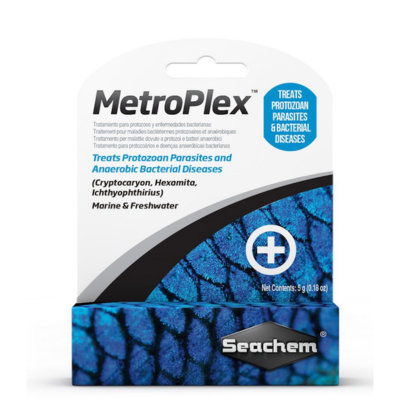
What Is Seachem Metroplex
Seachem Metroplex is a professional grade antiprotozoal and antibacterial powder that aquarium hobbyists across India trust for treating some of the most stubborn internal infections in fish. Formulated around metronidazole, a nitroimidazole compound with proven efficacy against anaerobic protozoa and bacteria, Metroplex works precisely where other treatments fail. Furthermore, it is the go-to choice for any keeper of discus, cichlids, or marine fish who wants a reliable, research-backed solution for internal flagellate infections, anaerobic bacterial disease, and the devastating condition known as hole in the head disease.
In India, discus keeping has grown tremendously over the past decade. Hobbyists from Chennai, Pune, Hyderabad, and Kolkata are now maintaining elaborate discus tanks, and consequently the demand for effective treatments like Seachem Metroplex has never been higher. At Ocean Paws, we stock authentic Seachem products sourced through authorised channels, so you can trust every gram you use in your aquarium.
What Diseases Does Seachem Metroplex Treat
Seachem Metroplex is specifically designed to target internal protozoa and anaerobic bacteria. Moreover, it is the most widely recommended treatment for Hexamita and Spironucleus infections, which are the two flagellate parasites responsible for the conditions known as hole in the head disease and head and lateral line erosion in cichlids, discus, and many marine fish.
Hexamita and its close relative Spironucleus are intestinal flagellates that naturally exist at low levels in many cichlids and discus. However, when the fish experiences stress from poor water quality, elevated nitrates, overcrowding, or inadequate nutrition, the parasite multiplies rapidly and causes serious systemic disease. As a result, hobbyists dealing with white stringy faeces, pitted lesions on the forehead, dramatic weight loss despite feeding, or darkened body colour should consider Seachem Metroplex as the primary treatment.
Additionally, Seachem Metroplex is effective against anaerobic bacteria including Bacteroides and Clostridium species, as well as offering some activity against opportunistic pathogens like Aeromonas and Pseudomonas when they are operating in anaerobic conditions. Therefore, fish suffering from internal bacterial bloat, internal rot, or infections following intestinal damage from flagellates can benefit from Metroplex treatment.
It is equally important to understand what Seachem Metroplex does not treat. It is not effective against external parasites like ich or velvet, and it will not address fungal infections or ectoparasitic infestations. Consequently, if your fish shows white salt grain spots across the body or rapid gill movement without any other symptoms, you will need a different treatment entirely.
How Seachem Metroplex Works
The science behind Seachem Metroplex is both elegant and precise. Metronidazole, the active compound, belongs to the nitroimidazole class of medications. Inside the bodies of anaerobic organisms like Hexamita and Spironucleus, the compound undergoes enzymatic reduction through anaerobic metabolic pathways. Furthermore, this reduction creates highly reactive intermediates that directly damage the DNA of the target organism and inhibit nucleic acid synthesis, ultimately killing the parasite from within.
The reason Seachem Metroplex is safe for fish and beneficial bacteria is equally important to understand. Aerobic organisms, including fish and the nitrifying bacteria in your biological filter, simply lack the reducing enzymes needed to activate metronidazole into its toxic form. Consequently, the medication causes no harm to beneficial Nitrosomonas and Nitrospira colonies, unlike broad spectrum antibiotics that can crash a well-established cycled tank. This selectivity is one of the key reasons aquarium professionals choose Seachem Metroplex over less targeted treatment approaches.
Which Fish Benefit from Seachem Metroplex
Seachem Metroplex is suitable for a wide range of freshwater and marine species. In freshwater tanks, cichlids and discus are the most common candidates for Metroplex treatment, as these fish are particularly susceptible to Hexamita and hole in the head disease. Additionally, loaches, catfish, characins, and livebearers all tolerate Metroplex well, including scaleless species that often react badly to salt dips or harsh chemical treatments.
For discus keepers in India, Seachem Metroplex is practically essential. Indian summer temperatures regularly push past 30 degrees Celsius in the room, and discus tanks at elevated temperatures become more prone to parasite proliferation under stress. Moreover, discus imported from Southeast Asia frequently carry Hexamita at subclinical levels, and the stress of transport combined with adjustment to Indian water chemistry can trigger full-blown outbreaks within weeks of purchase. Therefore, many experienced Indian discus keepers use medicated food with Seachem Metroplex as a prophylactic protocol for all new arrivals before symptoms appear.
In marine tanks, species like angelfish, tangs, clownfish, wrasses, and gobies all respond well to Metroplex treatment. However, it is worth noting that seahorses should be observed closely during any Metroplex course, and treatment must be conducted in a dedicated hospital tank since Seachem Metroplex is not reef safe for environments containing corals and invertebrates.
How to Use Seachem Metroplex as a Water Treatment
Seachem Metroplex comes with a convenient measuring scoop included in the packaging. The standard dose for water column treatment is one scoop, which delivers approximately 125mg of medication, per 40 litres of tank water. Furthermore, this dose should be repeated every 48 hours for a total of three doses, giving you a six-day treatment course that addresses both the active parasite population and newly released cysts.
Before each dose, perform a 25% water change to remove accumulated medication and waste from the previous dose. Additionally, activated carbon must be removed from your filter before beginning treatment, since carbon will adsorb the medication before it can act on the target organism. UV sterilisers should also be switched off during treatment, as ultraviolet light degrades metronidazole and significantly reduces its effectiveness.
To support your fish during treatment, increase surface agitation slightly to maintain good oxygenation, particularly in warm water where dissolved oxygen levels drop. Subsequently, after completing the full three-dose course, perform a 25% water change and reintroduce carbon to your filter to clear any residual medication. If symptoms persist after seven days, a second full course can be repeated. However, always address the underlying trigger of the infection, whether that is elevated nitrate, poor diet, overcrowding, or chronic stress, to prevent recurrence.
How to Use Seachem Metroplex in Fish Food
Food-based treatment with Seachem Metroplex is highly effective for fish that are still eating, and moreover it delivers medication directly to the intestinal tract where Hexamita and Spironucleus reside. This targeted approach is particularly valuable because it reduces the overall drug concentration in the water column and consequently has even less impact on your biological filter.
To prepare medicated food, combine one measure of Seachem Metroplex with one measure of Seachem Focus per tablespoon of your chosen food. Seachem Focus is a polymer that binds the medication to food particles so the active ingredient does not leach into the water before the fish consumes it. Furthermore, adding Seachem Garlic Guard to the mix encourages reluctant or appetite-suppressed fish to accept the medicated food by masking the taste of the medication.
Feed the medicated preparation once daily for seven to fourteen days depending on the severity of the infection and how quickly the fish responds. During food-based treatment, normal water changes can continue without interruption and biological filtration does not need to be disturbed. Additionally, this method is ideal for treating fish in a display community tank where moving individuals to a hospital setup is not practical.
Seachem Metroplex and Indian Water Quality
Indian tap water quality varies enormously from city to city, and this variation directly affects the baseline health of aquarium fish and their susceptibility to disease. In Mumbai and Pune, municipal water is heavily chloraminated and occasionally contains elevated heavy metals from aging distribution infrastructure. In Chennai and Hyderabad, water may arrive with high hardness and dissolved solids that shift pH unpredictably. Furthermore, in smaller towns and semi-urban areas across the country, water quality can be entirely unpredictable from season to season and even from day to day.
All of these water quality challenges contribute to chronic low-grade stress in aquarium fish, and consequently stressed fish are significantly more susceptible to Hexamita outbreaks and secondary infections. Therefore, Indian hobbyists who maintain discus, flowerhorn cichlids, or freshwater angelfish should keep Seachem Metroplex on hand as part of a complete aquarium health cabinet alongside Seachem Prime for water conditioning and a high-quality varied diet to support immune function.
Combining Seachem Metroplex with Kanaplex
One of the most clinically important features of Seachem Metroplex is how effectively it combines with Seachem Kanaplex for treating complex mixed infections. In many cases of advanced hole in the head disease, secondary aerobic bacterial infections colonise the open lesions and worsen the condition considerably. Furthermore, the combination of Metroplex targeting the underlying protozoan parasite and Kanaplex addressing the accompanying aerobic bacterial infection represents a comprehensive treatment approach recommended by many professional fish health specialists and experienced aquarists.
When using both products together in the water column, follow the standard dosing protocol for each product individually. However, always ensure strong surface aeration and close water quality monitoring during combination therapy, since the fish is likely under significant physiological stress during recovery. Additionally, supplementing with a high quality diet rich in vitamins, spirulina, and trace minerals supports immune function and accelerates tissue recovery from lesions once the infection is brought under control.
Seachem Metroplex Sizes and Value
Seachem Metroplex is available in two convenient sizes to suit different aquarium scales and treatment needs. The 5g pack is ideal for hobbyists treating a single tank or responding to an outbreak in a smaller aquarium of 200 to 400 litres. Moreover, at the standard dosing rate of one scoop per 40 litres per 48 hours, the 5g pack provides several full treatment courses for a typical home aquarium.
The 100g pack offers outstanding value for serious hobbyists who maintain multiple tanks, run a dedicated quarantine system, or breed cichlids or discus at scale. Furthermore, because Seachem Metroplex retains its full potency when stored in a cool, dry location away from direct sunlight and moisture, buying in the larger size makes practical and economic sense for anyone who keeps fish that are regularly susceptible to Hexamita or anaerobic bacterial infections.
Treatment Preparation and Aftercare Checklist
Preparation is essential for a successful Metroplex treatment course. Before starting, remove all activated carbon from your filtration system, switch off any UV steriliser, and set up a dedicated hospital tank if you are treating marine fish or any fish from a reef-associated environment. Furthermore, test your water parameters thoroughly before adding any medication and ensure ammonia and nitrite are at zero, since fish under chemical stress from poor water quality respond poorly to treatment.
After completing the treatment course, reintroduce carbon to your filter and resume normal maintenance immediately. Additionally, perform a thorough review of your husbandry practices to address the root cause of the outbreak. Improving diet diversity with frozen bloodworm, mysis shrimp, or vitamin-enriched pellets reduces the likelihood of recurrence, particularly in discus. Therefore, treatment should always be paired with an honest assessment of the tank environment, water change schedule, and feeding regimen to prevent the same problem from returning.
Frequently Asked Questions About Seachem Metroplex
Is Seachem Metroplex safe for planted tanks
Yes, Seachem Metroplex does not harm aquatic plants at therapeutic dosing levels. Furthermore, at standard doses it has minimal impact on biological filtration, so your established cycled tank should remain stable throughout the full treatment course without requiring additional beneficial bacteria supplementation.
Can I use Seachem Metroplex in a reef tank
No, Seachem Metroplex is not safe for reef tanks. Corals and invertebrates including shrimp, snails, and starfish are sensitive to metronidazole. Therefore, any reef fish requiring Metroplex treatment must be transferred to a dedicated hospital tank for the full duration of the treatment course.
How long does a Seachem Metroplex water course take
The standard water column course involves three doses given every 48 hours, meaning the full course runs for six days total. Additionally, a food-based course runs for seven to fourteen days depending on the severity of the infection and how quickly the fish shows visible signs of recovery.
What is the difference between water treatment and food treatment with Metroplex
Water treatment exposes the entire tank to medication and is the appropriate approach for fish that have stopped eating or for treating a group of fish simultaneously. Food treatment delivers medication directly into the gut where Hexamita lives and is therefore considered more targeted and gentler on biological filtration. Furthermore, for fish that are still eating, food treatment is generally the preferred first approach because of its precision and reduced water column impact.
Can Seachem Metroplex be used with scaleless fish like loaches and corydoras
Yes, Seachem Metroplex is fully safe for scaleless fish including loaches, corydoras, and naked catfish. This makes it considerably safer than salt treatments or many other medications, which scaleless fish often struggle to tolerate. As a result, Metroplex is one of the few internal treatments that can be safely used across a mixed species community.
Why are my discus getting hole in the head disease
Hole in the head disease in discus is typically triggered by a combination of the Hexamita or Spironucleus parasite together with elevated nitrates, chronic stress, or nutritional deficiency. Consequently, successful treatment with Seachem Metroplex must be paired with water quality improvement and dietary enrichment. Nitrate levels above 20 ppm are considered a significant risk factor in discus tanks and should be addressed through more frequent water changes alongside treatment.
Can I repeat the Seachem Metroplex course if symptoms do not clear
Yes, if symptoms have not fully resolved after completing the first course, wait seven days and then repeat the full treatment protocol. However, if there is no meaningful improvement after two complete courses, it is worth reconsidering the diagnosis, since conditions that visually resemble hole in the head disease can sometimes have other underlying causes including nutritional deficiency without active parasitic infection.
Does Seachem Metroplex harm the nitrogen cycle
No, Seachem Metroplex has minimal impact on nitrifying bacteria. Beneficial Nitrosomonas and Nitrospira are aerobic organisms that lack the enzymes needed to activate metronidazole into its toxic form. Therefore, biological filtration is preserved throughout treatment, unlike with many broad spectrum antibiotics that can destabilise an established tank’s nitrogen cycle.
Where can I buy Seachem Metroplex online in India
You can buy authentic Seachem Metroplex online in India from Ocean Paws. We stock genuine Seachem products and ship across India to Mumbai, Delhi, Bangalore, Chennai, Hyderabad, Kolkata, Pune, and beyond. Additionally, you can browse our complete range of fish health treatments and Seachem products to find everything your aquarium needs in one place.
How should I store Seachem Metroplex
Store Seachem Metroplex in a cool, dry location away from direct sunlight and moisture. Furthermore, always replace the cap tightly after each use to prevent ambient humidity from affecting the powder and reducing its potency. When stored correctly, Seachem Metroplex retains full efficacy throughout its shelf life, making the larger 100g pack a sensible choice for regular users.
Written by Pavan, co-founder of Ocean Paws and aquarium specialist with 20 years of hands-on fishkeeping experience.++


Reviews
Clear filtersThere are no reviews yet.