 Dog Grooming Products
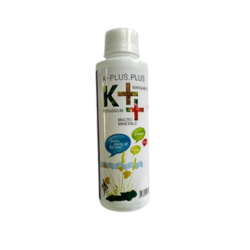
Aquatic Remedies K++ Potassium Manganese Calcium for Aquarium Plants
If you have been keeping a planted aquarium in India for even a few months and your plants look healthy on the surface but older leaves keep developing small holes or yellowing at the edges, there is an excellent chance your tank is running low on potassium. It is the single most commonly deficient macronutrient in Indian planted aquariums and most hobbyists never think to check it. Aquatic Remedies K++ is an Indian-made targeted supplement designed specifically to replenish potassium, manganese and calcium in planted tanks where these minerals are consistently being depleted by plant uptake, water changes and the natural limitations of Indian tap water.
At Ocean Paws we stock Aquatic Remedies K++ in both 120ml and 220ml bottles to suit tanks of every size across India.
What Is Aquatic Remedies K++ and What Does It Do
Aquatic Remedies K++ is a liquid macronutrient supplement formulated for planted freshwater aquariums. It delivers three nutrients in a single dose — Potassium for structural cell health and enzyme function, Manganese for photosynthesis support and trace mineral processing, and Calcium for cell wall integrity and nutrient transport. Critically it contains no Nitrogen and no Phosphorus. This means you can dose K++ generously without worrying about feeding algae which is a major practical advantage over all-in-one fertilizers that bundle potassium with nitrogen and phosphorus in fixed ratios.
Potassium is one of the few nutrients in planted aquarium care where slight overdosing is genuinely not a concern. It is relatively safe to dose consistently and the consequences of underdosing are far more damaging to your plants than any risk of slight excess.
Why Potassium for Aquarium Plants Is Always Running Low
Potassium behaves differently from almost every other planted tank nutrient. Understanding why helps you appreciate why Aquatic Remedies K++ needs to become part of your regular dosing routine rather than an occasional supplement.
The RO Water Problem
Hobbyists using reverse osmosis water face the most severe potassium deficiency scenario of anyone in the planted aquarium hobby. The RO membrane removes virtually everything from water including potassium. Most Indian remineralizing products designed for RO water focus on rebuilding General Hardness through calcium and magnesium. They do not restore potassium. So RO water users who remineralise correctly and still skip a dedicated potassium supplement will likely see deficiency symptoms within a few weeks of setting up a new planted tank.
The Fish Waste and Substrate Gap
Fish waste and fish food break down into nitrogen compounds and phosphate in the water column. They contribute almost nothing to potassium levels. Similarly, most popular planted aquarium substrates available in India are formulated to provide nitrogen and some phosphorus as starter nutrients. Potassium is almost never included in meaningful quantities. This means from day one your planted tank is likely running a potassium deficit that only grows over time as plants consume it and water changes remove whatever trace amounts tap water delivers.
Potassium activates over 60 different enzyme systems in aquatic plants managing photosynthesis, protein synthesis, carbohydrate metabolism and osmoregulation. Without adequate potassium a plant cannot maintain turgor pressure in its cells. The walls of leaf cells collapse and the tissue dies forming the characteristic pinholes and ragged edges that every experienced Indian aquascaper knows too well.
How to Identify Potassium and Manganese Deficiency in Your Tank
Potassium Deficiency Symptoms
The earliest and most diagnostic sign of potassium deficiency in aquarium plants is the appearance of small pinholes on older established leaves. Because potassium is a mobile nutrient, the plant moves it from old tissue to support new growth when levels drop. The older leaves are therefore always the first to show symptoms while newer growth at the tips may look normal. As the deficiency worsens the pinholes enlarge into ragged holes, the leaf edges turn yellow and then brown, the tissue becomes brittle and fragile, and stems lose their structural strength. Left unaddressed, affected leaves decay entirely.
These symptoms appearing on older leaves while new growth looks fine is the key diagnostic pattern that separates potassium deficiency from iron deficiency which shows on new growth first.
Manganese Deficiency Symptoms
Manganese deficiency shows on younger leaves rather than older ones making it easy to distinguish from potassium if you know what to look for. The areas between the leaf veins on new young leaves turn pale yellow while the veins themselves remain green. In more advanced cases, elongated necrotic holes form between the veins and the affected areas develop a distinctive interveinal chlorosis pattern. Manganese is essential for the oxygen-evolving complex of Photosystem II in the photosynthesis process. Without it a plant cannot run photosynthesis at full efficiency regardless of how much light or CO2 it receives.
Aquatic Remedies K++ Complete Specifications
| Detail | Specification |
|---|---|
| Brand | Aquatic Remedies |
| Active Nutrients | Potassium, Manganese, Calcium |
| Nitrogen Content | None |
| Phosphorus Content | None |
| Available Sizes | 120ml and 220ml |
| Daily Dose | 2ml per 100 litres |
| Alternative Dose | 10ml per 100 litres twice weekly |
| Suitable For | Low tech and high tech planted aquariums |
| Shrimp Safety | Safe for Neocaridina and Caridina shrimp |
| Origin | India |
| Recommended Potassium Target | 10 to 30ppm in water column |
Dosing Guide for Aquatic Remedies K++
Low Tech Tanks Without CO2 Injection
For a low tech planted tank with moderate plant density and no CO2 injection, dose K++ at 2ml per 100 litres every alternate day or three times per week. Start with this frequency for the first two weeks and observe your older leaves for any change in the pinhole or yellowing pattern. If existing symptoms continue without improvement, increase to daily dosing. Perform a 30 percent water change weekly before your dosing day to reset any accumulated mineral levels before adding fresh nutrients.
Do not start dosing K++ in a brand new tank immediately. Wait for the first two weeks to allow the tank to cycle and the initial substrate nutrients to establish before introducing supplemental fertilization.
High Tech Tanks With CO2 Injection
High tech planted tanks with CO2 injection and strong lighting consume potassium significantly faster because plant growth rates are much higher. Dose K++ at 2ml per 100 litres daily as the standard recommended protocol. Pair K++ on the same days as your other macronutrient doses. On micronutrient dosing days dose K++ first and add your iron and trace elements a few hours later if possible. Maintain a 30 to 50 percent water change weekly and dose K++ fresh after each water change.
Shrimp Tanks
Aquatic Remedies K++ is completely safe for shrimp tanks. Dose at 2ml per 100 litres daily as normal. For newly established shrimp tanks where shrimp are still acclimating, start at 1ml per 100 litres for the first two weeks before increasing to the full dose. Observe shrimp behaviour for the first 48 hours after first use. Healthy, active shrimp that are feeding and moving normally confirm the product is well tolerated.
Why K++ Is Safe for Shrimp and Sensitive Invertebrates
The reason Aquatic Remedies K++ is genuinely safe for shrimp while many all-in-one fertilizers are not comes down to one element — copper. Copper is highly toxic to Neocaridina and Caridina shrimp at even trace concentrations. A single overdose of a copper-containing fertilizer can wipe out an entire shrimp colony within hours.
Aquatic Remedies K++ contains no copper. The three active ingredients Potassium, Manganese and Calcium are all essential nutrients that shrimp themselves need in their aquatic environment. Potassium is not harmful to invertebrates at the dosing levels used in planted aquariums. This makes K++ one of the few macronutrient supplements that shrimp hobbyists can dose with complete confidence alongside their Neocaridina Cherry Shrimp, Blue Dream Shrimp, Yellow Shrimp, Caridina Crystal Red Shrimp and Amano Shrimp without any risk.
Using K++ as Part of a Complete Fertilizer Routine
Aquatic Remedies K++ performs best as part of a complete nutrient system. The manufacturer recommends combining K++ with Plant Food for nitrogen and phosphorus, Plant Health Formula for micronutrients and iron, and Phyto Carb for organic carbon. Together these four products address every nutrient category that aquatic plants need simultaneously.
The Aquatic Remedies Planted Tank Beginner’s Pack available at Ocean Paws is the easiest way to start this complete routine as a bundle without having to figure out individual dosing protocols for each product from scratch. For hobbyists who already have an established fertilizer routine and want to add targeted potassium supplementation, K++ dosed daily alongside your existing macro and micro schedule is the straightforward addition that fills the one gap most liquid fertilizers in India leave unaddressed.
Frequently Asked Questions About Aquatic Remedies K++
How long does it take to see results after starting Aquatic Remedies K++?
With daily dosing at 2ml per 100 litres, most planted aquarium hobbyists report visible stabilisation of symptoms within 7 to 14 days. Existing pinholes on damaged leaves will not heal as dead tissue cannot recover. What you should watch for is the absence of new pinholes on fresh growth over the following two to three weeks. Once new leaves emerge clean without pinholes or yellowing you can confirm the deficiency has been corrected. Old damaged leaves can be trimmed away once new healthy growth is established.
Can I overdose Aquatic Remedies K++ and harm my plants or fish?
Potassium is one of the more forgiving nutrients in planted aquarium care. Unlike iron where excess can cause issues, moderate overdosing of potassium at levels hobbyists typically dose does not create toxicity problems in fish or plants. The recommended maximum target is around 30ppm in the water column. If you accidentally dose more than intended on a given day, a partial water change of 20 to 30 percent will bring levels back to a safe range. Do not dose multiple times in a single day as a general practice.
Do I need to test potassium levels before using K++?
Potassium test kits for aquariums are available but are less common than nitrate or phosphate tests in the Indian market. The practical approach most Indian hobbyists take is to look at their water source and plant symptoms rather than test results. If you use RO water or if your plants are showing pinholes and yellowing on older leaves, the evidence strongly suggests potassium deficiency and starting K++ is the appropriate response. If you want to be precise, a potassium test kit will show you whether your water column is at the target range of 10 to 30ppm.
Is Aquatic Remedies K++ suitable for use with all aquatic plants including carpeting plants?
Yes. K++ benefits all aquatic plant species because potassium is a universal macronutrient required by every plant. Fast growing stem plants, carpeting plants like Monte Carlo and Glossostigma, slow growing Anubias and Cryptocorynes, mosses and floating plants all require potassium for healthy cell function. Heavy carpeting plants and fast growing Rotala and Hygrophila species in high tech setups are particularly high potassium consumers and benefit most from daily dosing.
What is the difference between the 120ml and 220ml bottle of Aquatic Remedies K++?
The nutrient concentration and formula are identical in both sizes. The 120ml bottle at a lower price point is ideal for hobbyists with small nano or desktop tanks up to 60 litres, for those trying K++ for the first time, or for anyone with limited storage space. The 220ml bottle offers better value per ml and is the practical choice for medium to large planted tanks from 100 litres upward where daily dosing consumes the product faster. For a 100 litre tank dosed at 2ml per day, the 220ml bottle lasts approximately 110 days.
Aquatic Remedies K++ is available at Ocean Paws with fast delivery across Hyderabad, Bangalore, Mumbai, Chennai, Pune, Delhi, Kolkata and all major Indian cities. Choose your bottle size and give your planted aquarium the potassium it has been missing.


Reviews
Clear filtersThere are no reviews yet.